Acute Lower Back Pain
Sudden pain following lifting, twisting, exercise or an unfamiliar movement.
Assessment-led physiotherapy in Vasant Vihar
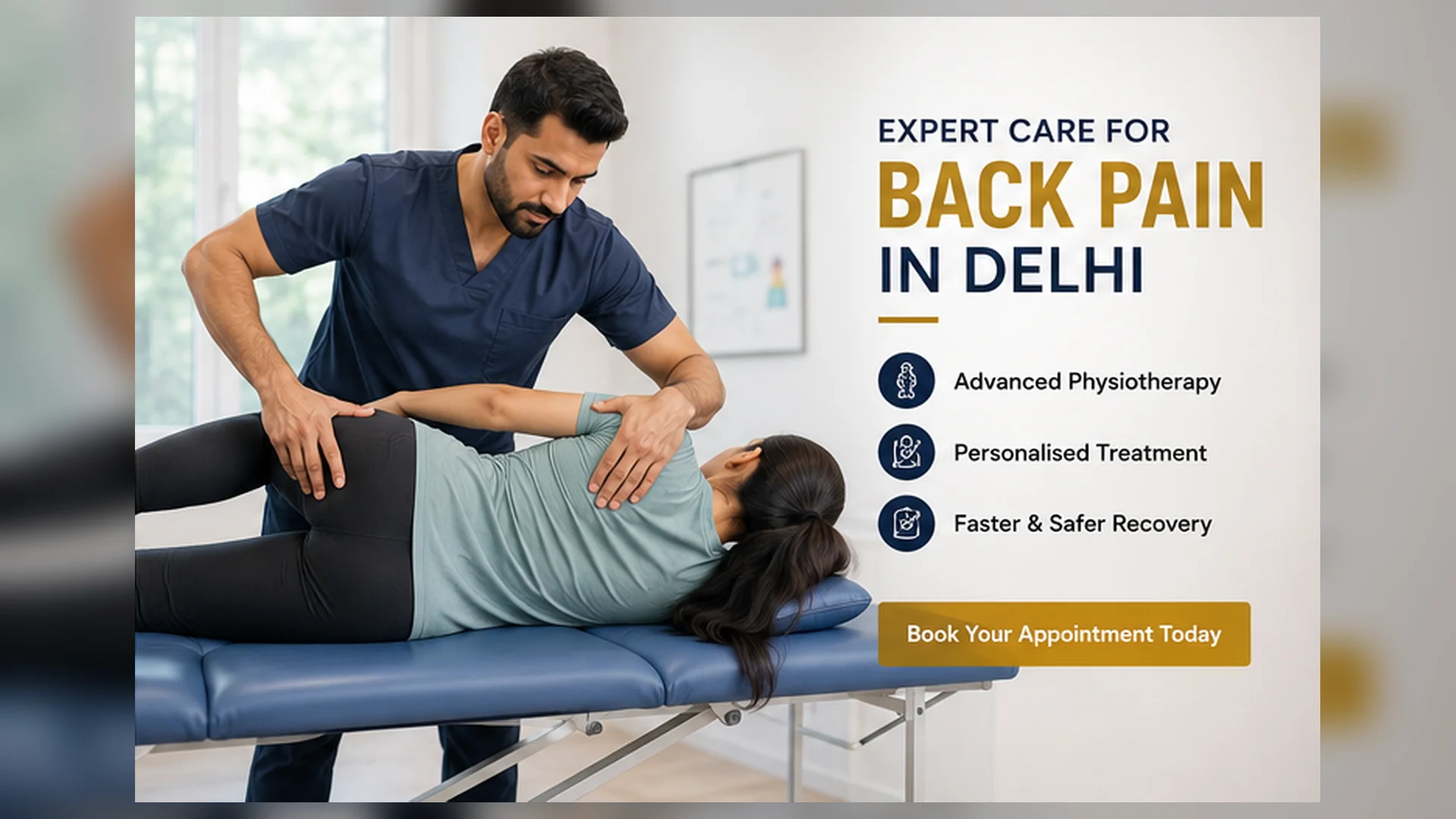
Back pain making it difficult to sit, bend, sleep, walk or work comfortably? Physioveda India provides personalised back pain treatment in Delhi for lower back pain, lumbar stiffness, recurring backache, sciatica and movement-related discomfort.
Your physiotherapist begins by understanding how your pain started, which movements aggravate it and how it affects your daily life. The findings are used to prepare a treatment and rehabilitation plan based on your symptoms, mobility, strength and recovery goals.

When to consider an assessment
Back pain is not always limited to the lower spine. It can affect sleep, walking, work, exercise and confidence during movement. Our approach to back pain treatment in Delhi begins with an individual physiotherapy assessment when symptoms are persistent, recurring or interfering with normal activities.
Conditions and pain patterns
For back pain treatment in Delhi, your symptoms are assessed as an individual clinical presentation rather than being managed with a one-size-fits-all exercise plan.
Sudden pain following lifting, twisting, exercise or an unfamiliar movement.
Symptoms that persist, fluctuate or repeatedly return after short-term relief.
Pain influenced by sitting, standing, walking, bending, lifting or position changes.
Back pain that may occur with disc irritation, leg pain, tingling or restricted movement.
Shooting, burning or radiating discomfort travelling into the buttock, thigh or lower leg.
Back stiffness or discomfort associated with age-related spinal changes.
Symptoms aggravated by desk work, prolonged sitting, driving or repetitive activity.
Structured rehabilitation after spinal procedures and appropriate medical clearance.
Related services: sciatica treatment in Delhi, physiotherapy for spinal disc herniation and sports physiotherapy in Delhi.
Understanding your presentation
There is rarely one explanation that applies to every patient. Safe, responsible back pain treatment in Delhi considers how tissue sensitivity, reduced mobility, nerve irritation, physical conditioning, repeated loading and individual recovery factors may interact.
Posture may influence symptoms for some people, but it should not automatically be blamed as the sole cause. The assessment should consider the complete pain pattern, activity demands and movement response.
Local clinical assessment
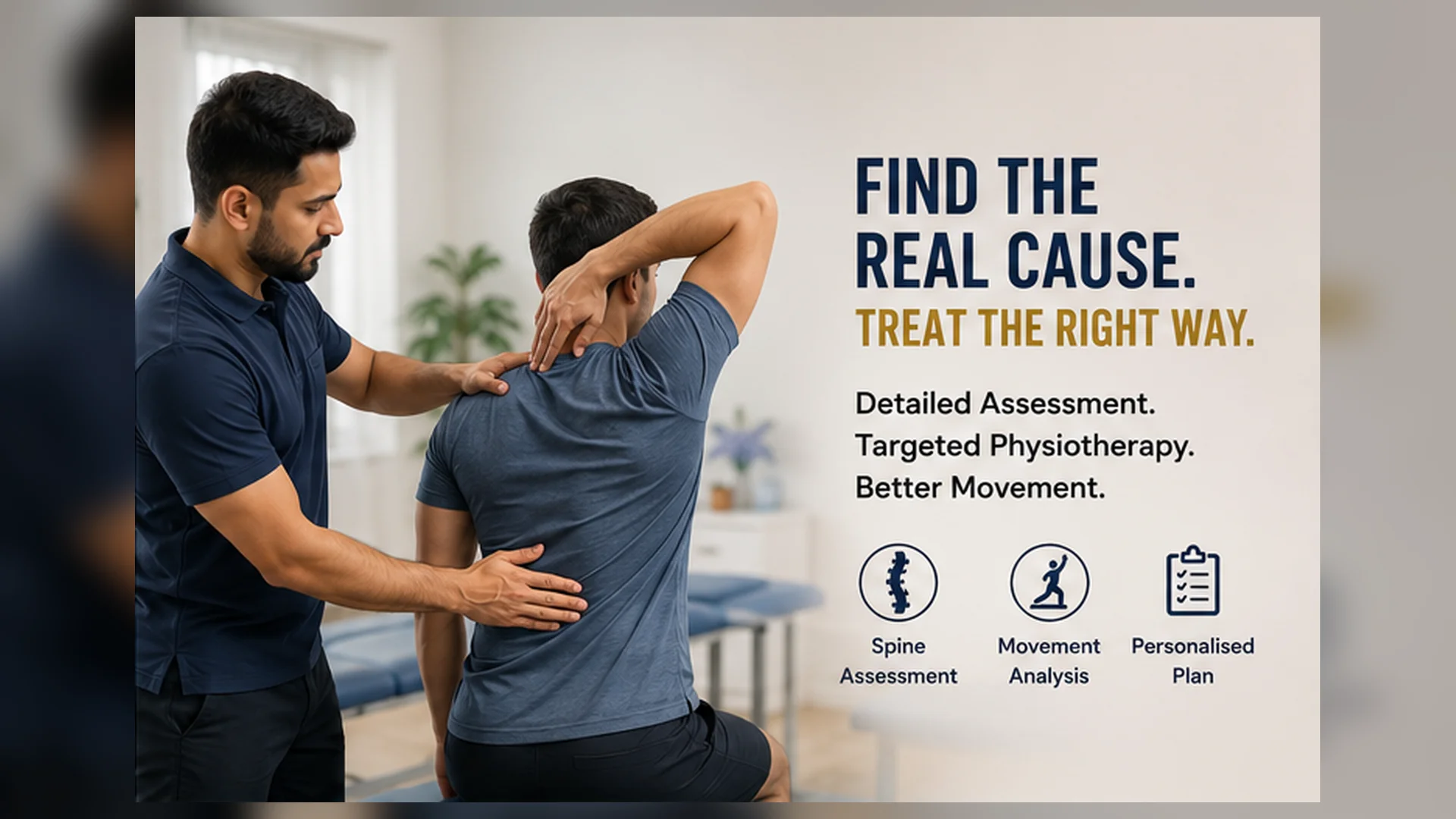
At Physioveda India, back pain treatment in Delhi starts with a structured assessment designed to identify movement limitations, symptom behaviour, relevant clinical signs and functional goals.
Patient safety
Most episodes of back pain are not emergencies. However, seek urgent medical assessment when back pain is accompanied by any of the following:
We don’t guess. We assess.
Effective back pain treatment in Delhi should begin with a detailed history, appropriate safety screening and a movement assessment, not a standard list of exercises copied for every patient.
We discuss how the pain started, where it is felt, aggravating movements, previous treatment, work demands, exercise habits and personal goals.
Your physiotherapist may assess bending, rotation, sitting, standing, walking, squatting, lifting and other movements relevant to your symptoms.
When nerve involvement is suspected, appropriate strength, sensation, reflex and nerve-mobility tests may be included.
We assess relevant mobility and strength around the lumbar spine, hips, pelvis and lower limbs.
Treatment is linked to practical tasks required for work, home responsibilities, travel, exercise or sport.
Assessment findings are used to explain the likely next steps and prepare a treatment plan that can be reviewed as you progress.
Individualised rehabilitation
Our back pain treatment in Delhi is planned according to your symptoms, stage of recovery, movement response and activity goals. There is no single technique suitable for every back-pain presentation.

Clear explanations can help reduce unnecessary fear and support a gradual, confident return to movement.
Exercises are selected according to how your symptoms respond rather than using a generic online routine.
Your plan may include mobility, trunk control, lower-limb strengthening, balance, endurance and gradual cardiovascular activity.
Hands-on techniques may be used to support movement and exercise when clinically suitable.
Carefully selected nerve-mobility work may be introduced when leg pain, tingling or neural sensitivity is present.
We may retrain bending, lifting, carrying, sitting, standing and other tasks linked to your symptoms.
Practical modifications can help you manage desk work, driving, travel and household activities during recovery.
Treatment progresses towards the physical demands of your gym programme, work responsibilities or sport.
You receive guidance on continuing relevant exercises and responding to future flare-ups more confidently.
Physioveda movement framework
Where relevant, back pain treatment in Delhi may incorporate the Physioveda Posture Correction Matrix — PPCM™. Instead of examining only the painful area, the framework may be used to consider functional posture, movement compensation, mobility, strength differences and activity demands.
PPCM™ is an assessment and treatment framework used alongside clinical physiotherapy. Individual results and recovery times vary.
A structured pathway
Your back pain treatment in Delhi is progressed according to assessment findings, functional goals and response to rehabilitation rather than being restricted to a fixed package for every patient.
We identify the pain pattern, movement limitations, functional difficulties and signs that may require medical referral.
Early care may focus on comfortable movement, activity modification and exercises your back can tolerate.
The programme progresses towards mobility, trunk control, hip strength, endurance and functional movement.
Your plan becomes more specific to work, lifting, travel, home responsibilities, gym training or sport.
You receive guidance on maintaining progress and continuing the most relevant exercises independently.
Why Physioveda India
Our approach is designed for patients who want a clear assessment, personalised treatment and practical guidance for returning to daily activity.
Your care begins with symptom history, safety screening and movement assessment, with neurological checks where indicated.
The programme reflects assessment findings, mobility, strength, daily demands and your agreed recovery goals.
Treatment is reviewed and progressed towards movement, strength, confidence and meaningful daily function.
Relevant care can connect with sciatica, sports, pain-management and PPCM™ services, with medical referral when further assessment is appropriate.
Treatment planning
There is no responsible fixed answer before an assessment. The number and frequency of sessions can depend on the duration of your symptoms, whether leg or nerve symptoms are present, movement limitation, previous episodes, physical demands, general health and response to the initial plan.
Progress should be reviewed regularly. As movement, strength and confidence improve, the treatment frequency and home programme may be adjusted.
Local physiotherapy clinic
Physioveda India is located in Vasant Vihar and is accessible to patients travelling from nearby South Delhi areas, including Vasant Kunj, Munirka, RK Puram, Shanti Niketan, Anand Niketan, Chanakyapuri, Dhaula Kuan, Safdarjung Enclave, Hauz Khas and Green Park.
Physioveda India
Phone:
+91 95990 55203
Email:
physiovedaindia1@gmail.com
Published working hours: 9:00 AM–7:00 PM
Patient questions
These answers provide general guidance. Your own treatment plan should be based on an individual assessment.
Continue exploring
Explore other Physioveda India services that may be relevant to back pain, mobility limitations or rehabilitation goals.
Book an assessment for back pain treatment in Delhi if lower back pain, lumbar stiffness, recurring backache or sciatica-related symptoms are affecting your movement or daily activities.