Post-Stroke Physiotherapy in Delhi | Neurorehabilitation Paralysis
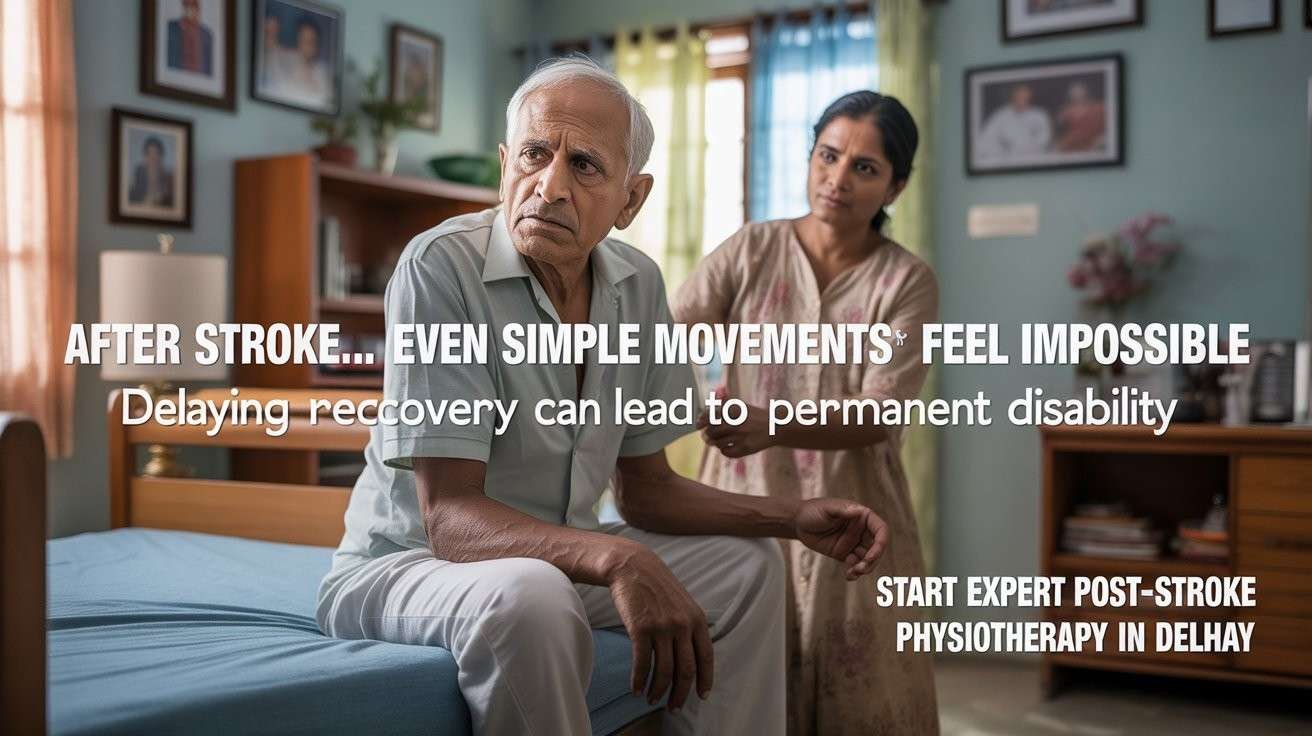
A physiotherapist assisting a patient with arm exercises using a resistance band. A stroke can strike suddenly, turning a normal day in Delhi into a moment of crisis. Imagine Mr. Sharma, a sixty-year-old schoolteacher in Vasant Vihar, collapsing in his kitchen one morning. He wakes up in a hospital bed, his right side limp and speech slurred. His family is frightened: “Will he ever walk or talk normally again?” This fear is common among stroke survivors and their loved ones. Yet amidst the uncertainty, there is hope. In this emotional moment—amid the beeping monitors and the rush of doctors—knowledge and compassionate care light the way. Expert post-stroke physiotherapy in Delhi offers not just exercises, but a tailored journey from fear toward regained function.
Early on, families ask: “What exactly happened to his body? How will physiotherapy help?” In simple terms, a stroke occurs when a blood vessel in the brain is blocked or bursts, cutting off oxygen. Brain cells begin to die, and the body part that those cells controlled suddenly stops working properly. If the stroke hits the left brain, the right arm and leg may weaken or even become paralyzed. Patients may lose sensation, coordination, or balance. Speech can slur and vision can blur. Some feel trapped in a weakened body, while depression or anxiety creeps in.
But the brain is remarkably resilient. Through neuroplasticity, it can rewire itself over time. This means that with the right stimulation, other brain cells can learn to take over lost functions. Physiotherapy leverages neuroplasticity: by repeatedly practicing movements and exercises, therapists encourage new neural connections. Essentially, we teach the brain again. This scientific foundation underpins stroke rehab everywhere.
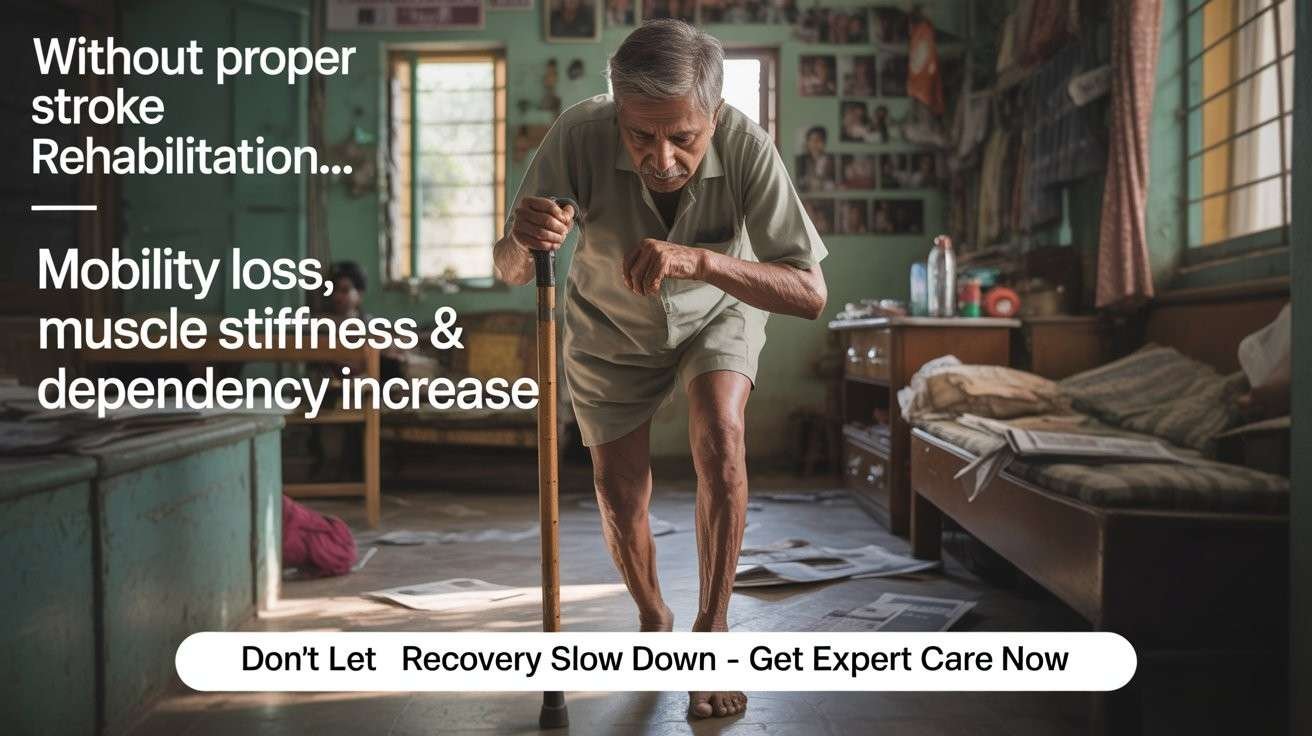
We also must prepare you: after a stroke, muscles often stiffen and develop abnormal reflexes (spasticity). This is when muscles tighten involuntarily. The American Stroke Association explains that spasticity arises when the injured brain can no longer properly regulate muscle tone. When muscle tone increases, simple tasks like opening a fist or bending an arm become painful. Over weeks, if untreated, muscles can contract permanently – like a joint stuck in place. That is why early movement is crucial. Regular stretching and limb use prevent these contractures.
What Happens in Post-Stroke Physiotherapy in Delhi
Post-Stroke Physiotherapy in Delhi. In the immediate aftermath of a stroke, the body and brain go through rapid changes. In our Delhi scenario, Mr. Sharma’s care team works to stabilize him. Whether in AIIMS or a South Delhi private hospital, doctors administer clot-busting medications if it’s an ischemic stroke or perform emergency procedures for a bleed. Once the acute crisis is addressed (often within 24–48 hours), the focus shifts to rehabilitation.
The brain damage from stroke causes neurological deficits: loss of strength on one side (hemiparesis), complete paralysis (hemiplegia), lack of coordination (ataxia), and sometimes loss of feeling. Imagine trying to move a stiff, paralyzed limb – muscles feel like they are working against cement. Simple balance is thrown off, and walking normally can become impossible. Many survivors also struggle with cognitive or speech changes, making daily life even harder. Patients often describe feeling trapped in a body that won’t obey, or frustrated by speech and memory problems.
Meanwhile, emotional and psychological effects often accompany the physical ones. Family members may feel overwhelmed or panicked; the patient may feel anxious or depressed. It’s vital to acknowledge these fears. At Physioveda, we treat the body and support the mind. We educate families, set realistic goals, and nurture hope.
Significantly, the stroke also unleashes a hidden ally: the brain’s own plasticity. We must harness it quickly. Studies and guidelines emphasize that rehabilitation should begin immediately after stabilization. The Government of India’s stroke guidelines explicitly state that “all patients should be referred to a physiotherapist/rehabilitation as soon as possible, preferably within 24 to 48 hours of admission”. During these first days, even passive movements (a therapist gently moving your limbs) can be started. Early therapy not only prevents complications; it kick-starts the brain’s relearning process.
Importance of Post-Stroke Physiotherapy in Delhi
Why is post-stroke physiotherapy in Delhi so critical after a stroke? Simply put, it links recovery to action. Without structured rehab, many patients would remain stuck. Muscles would grow weaker, joints would lock, and the brain would lose “skills” forever. For example, a patient who doesn’t attempt to use a paralyzed arm may create a vicious cycle: the brain says, “That arm isn’t being used,” and gradually allows the pathways to weaken further.
Post-stroke Physiotherapy in Dehli breaks that cycle. By guiding controlled movements, exercises, and functional tasks, therapists repeatedly stimulate neural circuits. This intensive, focused approach is scientifically proven to reduce long-term disability. In fact, Mayo Clinic notes that patients who participate in focused stroke rehabilitation tend to recover better than those who don’t. Every session with a physiotherapist is a chance to retrain your brain and body.
Post-Stroke Physiotherapy in Delhi: What happens if physiotherapy is ignored or delayed? We can speak from experience. Patients who begin rehab weeks or months after stroke often have complications: fixed joints (contractures), severe spasticity, pressure sores from immobility, and prolonged hospital stays. Their recovery is slower and often incomplete. Conversely, those who start therapy early often make remarkable strides.
At Physioveda India, we emphasize “the sooner, the better.” By starting therapy in the acute or subacute phase, patients often regain functions that seem lost. Research confirms this: the first three months post-stroke are the most critical window for major recovery. We communicate this clearly to patients and families: early rehab maximizes the brain’s plasticity and improves outcomes.
Phases of Post-Stroke Physiotherapy in Dehli Recovery
Post-Stroke Physiotherapy in Dehli
Post-Stroke Physiotherapy in Dehli
Post-Stroke Physiotherapy in Delhi. Stroke recovery can be viewed as a journey through distinct phases, each with its own goals and challenges. Understanding these phases helps families set realistic expectations. The acute phase begins the moment stroke symptoms start and lasts about the first week. It is the life-saving phase—doctors stabilize the patient, treat the cause, and manage medical complications. Critical rehabilitation often begins here too; in top Delhi hospitals, therapists assess strength and start gentle exercises within 24 hours.
flowchart LR S(Stroke Onset) –> A[Acute Phase (0–7 days)] A –> B[Subacute Phase (1 week–3 months)] B –> C[Chronic Phase (3+ months)]
Acute Phase (0–7 days): In the hospital, a multidisciplinary team (doctors, nurses, physios, occupational therapists) evaluates the stroke’s effects. Key tasks include preventing complications (like pneumonia or blood clots), assessing where the damage is, and initiating basic therapy. Even in these first days, therapists often start passive range-of-motion exercises for paralyzed limbs to prevent stiffness. They may work on sitting up or active attempts to move limbs. Emotions run high: families are anxious, and the patient may be confused. Clear communication is crucial – we reassure families that starting rehab now gives the best chance to minimize permanent loss.
Subacute Phase (1 week–3 months): This is the most intensive recovery period. Physically, the brain is working hardest to rewire. Patients often receive daily or twice-daily therapy sessions. These weeks are when the most improvement typically occurs. For example, a patient who couldn’t move an arm at 2 weeks post-stroke might begin to flicker a finger by 8 weeks. Therapists design programs with increasing challenge: moving from bed exercises to sitting on the edge of the bed, to standing with support, to practicing walking with a walker. This phase is hectic and hopeful. We coach families on home exercises and involve caregivers, because practice outside the clinic accelerates progress.
Chronic Phase (3+ months onward): After 3–6 months, recovery still continues but more slowly. By this time, patients often leave the hospital or rehab center and attend outpatient therapy. Much of the brain’s “easy wins” have happened. Improvements like increased strength or balance may take months or years. We emphasize to Delhi families that recovery doesn’t stop – it just changes form. Long-term rehab might involve weekly therapy plus home exercises. Even a slight gain (like being able to walk a few extra steps or feed oneself) is meaningful. According to experts, even at the 6-month mark and beyond, improvements are possible though slower.
Throughout all phases, therapists set goals. In the acute phase it may be “sit up for 1 minute.” In subacute, “take 5 steps.” In chronic, “walk to the corner shop” or “resume light work.” Celebrating each milestone, however small, keeps patients motivated. For example, when Mr. Sharma first held a cup of tea again, our entire team celebrated. By framing recovery as a journey, we help families remain positive and persistent.
Complete Treatment Approach for Post-Stroke Physiotherapy in Dehli
Post-Stroke Physiotherapy in Dehli
Post-Stroke Physiotherapy in Delhi. At this point, you might wonder: “What exactly will the therapist do?” In this section, we detail the key components of a thorough post-stroke physiotherapy program, as practiced by our experts at Physioveda.
1. Range of Motion (ROM) Exercises: After a stroke, joints and muscles quickly begin to stiffen if not moved. Neurologists and physiotherapists emphasize starting gentle movements immediately. In practical terms, this means a therapist will move the patient’s paralyzed limbs through their full range, every day. Passive ROM exercises prevent the joints from locking up and keep muscles flexible. For example, if a patient’s hand is clenched, the therapist will gently stretch the fingers open. These exercises maintain flexibility until the patient can start active movement. As soon as the patient is able, we progress to active-assisted and then active ROM, where the patient tries to move the limb themselves with guidance. This ongoing work is crucial: think of it as oiling a rusty hinge, so the body retains its ability to move. Without it, even regained strength cannot translate into actual motion.
2. Strength Rebuilding & Neural Activation: Stroke-caused weakness (paresis) requires gradual rebuilding. We use exercises tailored to the patient’s current ability: simple tasks like squeezing a ball, leg lifts in bed, or partial squats. Over weeks, resistance is increased (for instance, using ankle weights or resistance bands) to rebuild muscle power. But because stroke is a neurological event, we also focus on activation: helping the brain “remember” how to send signals to the muscles. Techniques may include functional electrical stimulation (FES), where small currents trigger a muscle to contract (for example, causing a foot to lift). This not only strengthens the muscle but provides sensory feedback to the brain. Therapists also train patients in sensory cues (like hot–cold stimulation) or mirror exercises to encourage movement. The goal is to restore the connection between brain and muscle. For example, a patient who can’t lift her arm at first may, by week 3, initiate a slight movement – a sign that neural pathways are re-engaging.
3. Neurofacilitation Techniques (Bobath/NDT, PNF): We employ specialized methods to normalize movement. One is the Bobath Concept (also called Neurodevelopmental Treatment, NDT). In practice, Bobath means the therapist uses their hands to guide and support the patient through proper postures and movements. For instance, when helping someone reach for an object, we might support the elbow in a way that encourages a straight arm rather than a bent, spastic one. According to expert physiotherapy sources, Bobath therapy “encourages a person to move in the most normal and energy-efficient way and prevents abnormal movement patterns”, helping to normalize tone and improve motor control. In plain terms, Bobath therapists focus on movement quality — not speed — and avoid letting patients compensate in ways that could become permanent.
Similarly, Proprioceptive Neuromuscular Facilitation (PNF) is used. PNF involves diagonal and spiral movement patterns, combined with gentle resistance, to “wake up” muscles in coordinated ways. For example, a therapist might have a patient push and pull in specific directions against resistance, which mimics everyday movements. These patterns reinforce nerve signals through sensory feedback (like the stretch reflex) to retrain muscle control. Together, Bobath and PNF act like an orchestra conductor, guiding each muscle to play its part in harmony. They harness neuroplasticity to help the patient relearn complex movements (like reaching overhead or stepping).
4. Balance Retraining & Fall Prevention: Stroke often upsets a person’s balance. Patients might feel they “lean” to one side or wobble when standing. Our program addresses this head-on. We use exercises that improve core strength and proprioception (body position sense). For instance, standing near parallel bars, patients practice shifting weight from one foot to the other, initially holding on and then gradually letting go. We also train coordination with tasks like catching a light ball or navigating an obstacle course. Evidence shows focused balance work reduces fall risk. We carefully educate families as well: in Delhi homes with stairs or busy sidewalks, we advise how to create safer environments (like non-slip rugs and clear walking paths). A therapist might spend time at home observing the patient’s walk and suggesting modifications.
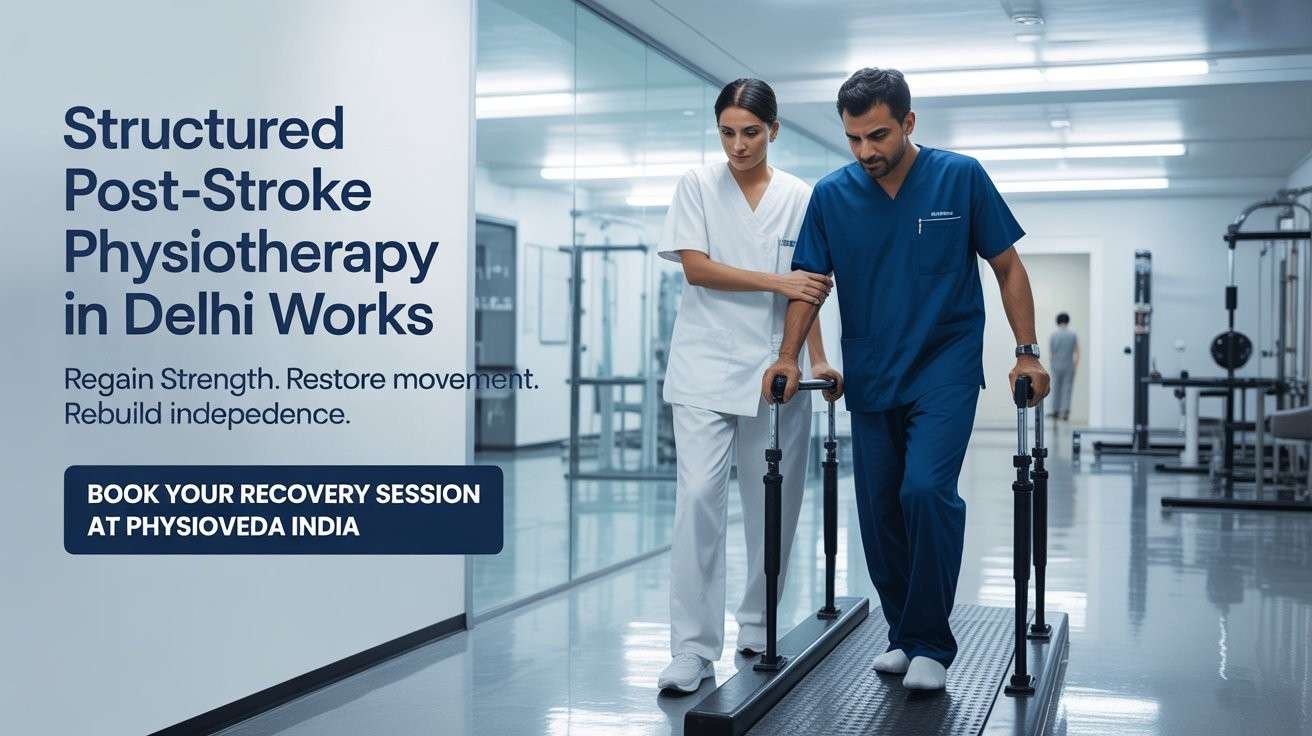
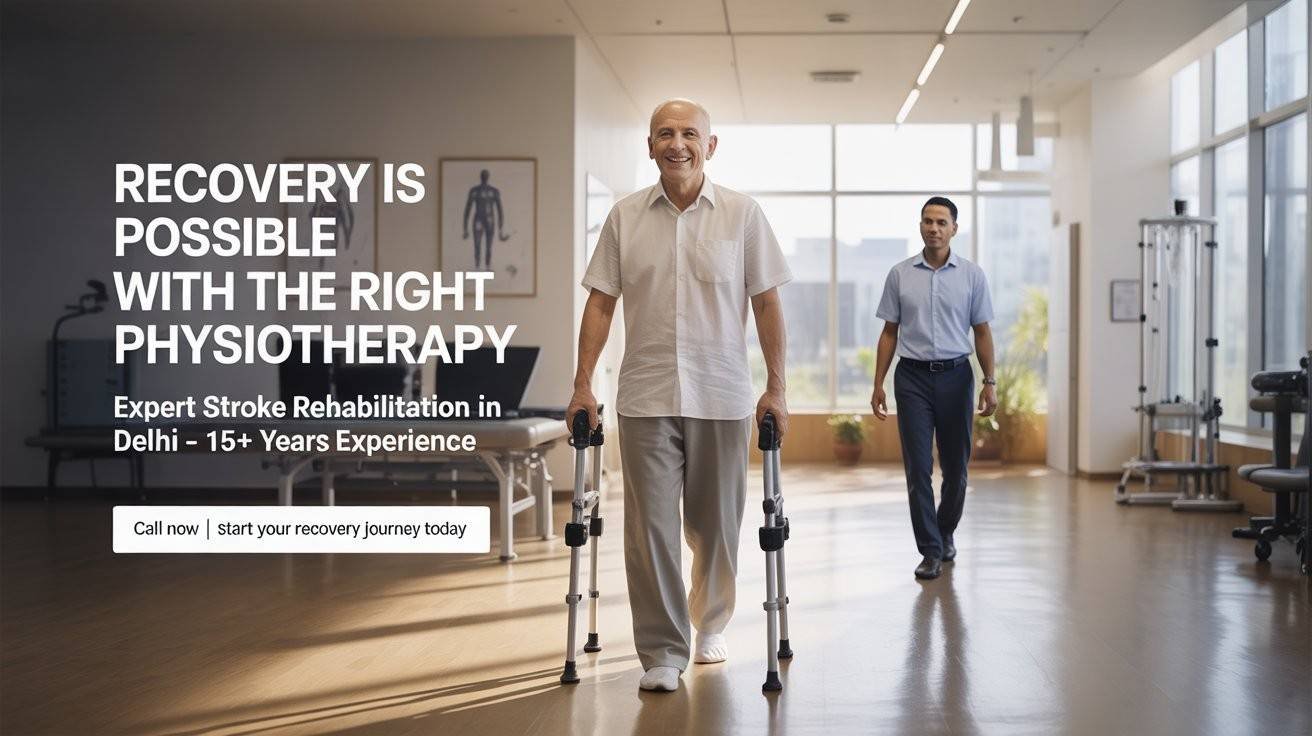
5. Gait (Walking) Training Progression: Learning to walk again is often the top goal. We break it into stepwise phases. First, we teach safe bed mobility: rolling, sitting up, and transferring to a chair. Then we practice standing – using support bars or a walker to hold weight safely. Once upright balance is sufficient, we begin stepping: initially assisted stepping in place, then gradually moving forward. Advanced tools can help here: for example, a body-weight-supported treadmill lets patients practice walking while a harness takes some weight, giving them a “floating” sense of motion. Therapists guide the gait cycle – heel strike, toe push-off – to ensure a natural pattern. Research highlights the importance of this: repetitive gait training on treadmills significantly improves walking ability in stroke patients. As patients improve, supports are gradually removed: from walker to cane to independent steps. We also instruct on compensatory strategies (if needed) such as using a foot drop brace or teaching a patient to swing the leg differently for safer walking. Each small success is reinforced with encouragement – when Mr. Sharma took his first 5 independent steps, our team celebrated.
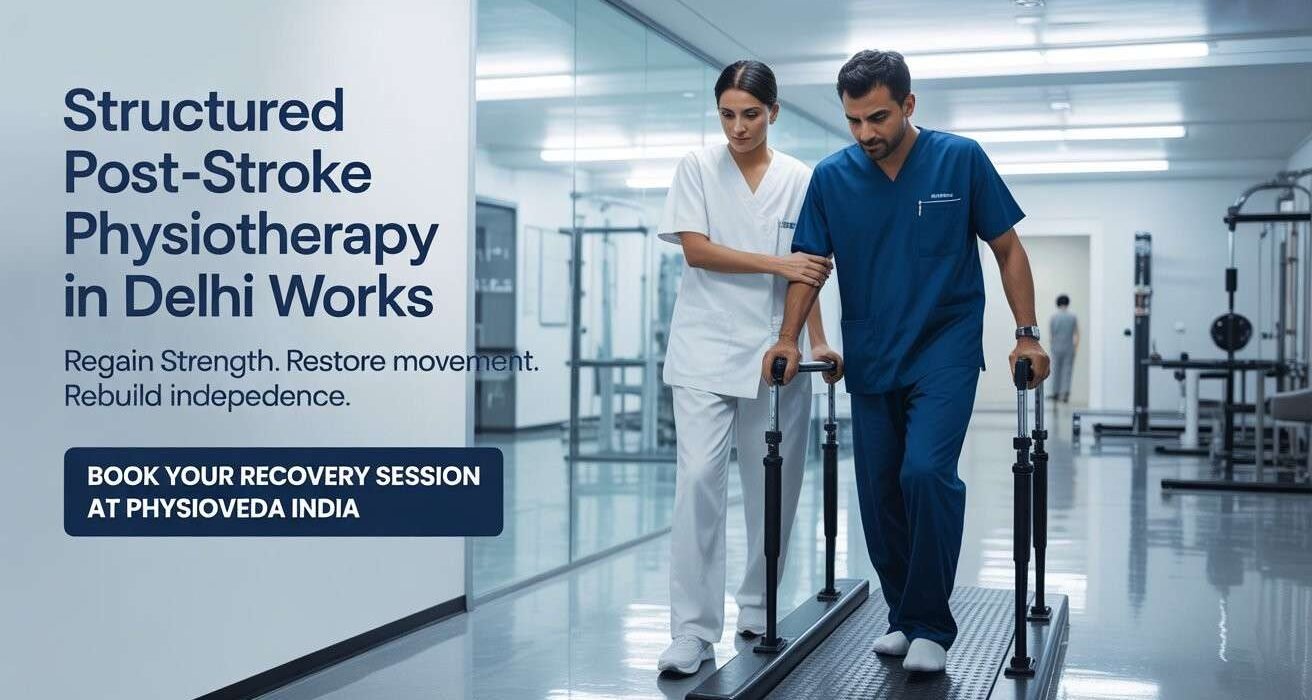
A physiotherapist guiding a patient through a standing gait exercise to retrain walking. For example, in gait training, therapists often begin with supported standing and weight-shifting, then gradually help patients take steps. The image above shows a therapist assisting a patient in standing and taking small steps, illustrating this progression.
6. Activities of Daily Living (ADLs) Training: Regaining the ability to do everyday tasks is the ultimate goal. We train patients on dressing (e.g. buttoning shirts), bathing, eating, and grooming. This often involves breaking tasks into smaller actions and practicing them repetitively. For example, to relearn how to use a spoon, a patient might first practice the hand movements in isolation, then gradually combine them with the act of eating. Our therapists sometimes use real objects (like utensils or toothbrushes) during therapy sessions to simulate daily life. Following Bobath principles, we discourage “compensatory” movements that reduce independence; instead we encourage even slower, effortful movements that mimic normal function. Each time a patient feeds themselves or stands from a chair independently, it marks a milestone in recovery.
7. Spasticity Management (Science Explained): Recall that spasticity is the abnormal muscle stiffness after stroke. Managing it is both an art and a science. Physically, we use regular stretching: for instance, gently pulling a spastic finger back several times a day to keep it flexible. We also position limbs to keep them extended rather than curled. Weight-bearing exercises (like letting a paralyzed arm press down on a table) can reduce tone over time. The American Stroke Association advises that “moving as much as possible is important to ease muscle tightening and prevent muscle shortening. Regular stretching with a wide range of motion and exercise of the affected limbs can both be beneficial.”.
At our clinic, every session includes targeted stretches for spastic muscles, helping to lengthen them and improve joint movement. For severe spasticity, we may use modalities like hot packs or cold therapy to relax muscles temporarily. We also coordinate with doctors: in some cases, patients may receive botulinum toxin injections or medications like baclofen, but crucially, rehab continues alongside to maximize benefit. In all, our goal is to reduce stiffness, improve comfort, and maintain mobility so that the patient can continue other therapies effectively.
8. Hand Function Recovery: The hand is a complex marvel; regaining its use after stroke is challenging but vital. We employ fine-motor exercises, such as bead threading, therapy putty, or pegboards, to retrain grasp and release. Sometimes we use splints to keep joints in proper position between sessions. For some patients, we apply constraint-induced movement therapy, where the healthy hand is gently restrained so the weaker hand must attempt tasks (this forces the brain to re-engage that side). If a hand is almost completely limp, we begin with mirror therapy (the patient watches the healthy hand move in a mirror, tricking the brain into “seeing” the affected hand move) and sensory stimulation. Notably, research shows that EMG biofeedback—using sensors to provide audio/visual signals of muscle activity—can significantly improve motor control in stroke patients. We utilize such advanced tools when appropriate. Over time, these techniques help patients regain precision and strength in their fingers and wrist, essential for independence.
9. Chest Physiotherapy: Because stroke patients often breathe shallowly or cough weakly, we include respiratory exercises. We teach deep breathing techniques and encourage coughing to clear the lungs. Positions like sitting upright or in a semi-reclined position help expand the chest. These measures prevent complications like pneumonia. In a few sessions we might use gentle rib mobilizations or percussion (like gentle claps on the back) to loosen mucus. This aspect of therapy ensures the patient’s lungs stay clear, supporting overall health during recovery.
Each of these therapy elements is explained and personalized during consultations. We never rush or use “one size fits all” programs. Every session at Physioveda India can feel like a detailed doctor-patient consultation: the therapist educates, demonstrates, encourages, and adjusts based on real-time feedback. These deep explanations reflect our expertise and commitment to patient understanding.
Advanced Approach at Physioveda India for Post-Stroke Physiotherapy in Dehli
Post-Stroke Physiotherapy in Dehli
Not all clinics are the same. At Physioveda India in Vasant Vihar (South Delhi), we combine 15+ years of experience with innovative systems to give stroke patients the best shot at recovery. A cornerstone of our care is the proprietary Posture Correction Matrix/Method (PPCM™). Simply put, PPCM™ is a diagnostic and treatment system that analyzes your entire posture, movement, and muscle balance to find the root causes of dysfunction. While many clinics might focus only on a weak muscle here or there, PPCM™ might reveal that Mr. Sharma’s limp is actually linked to a pelvic tilt or that his shoulder pain is due to neck stiffness. This deep-dive approach means our treatments target the source, not just the symptom.
Concretely, PPCM™ involves over 400 techniques – think of it as an enormous toolbox of manual therapy, stretches, neural mobilizations, and exercises. We mix and match these tools based on each patient’s needs. For example, one session might include a gentle spinal mobilization to improve balance, a neural stretch to calm spastic leg muscles, and a corrective breathing exercise to engage the core. The result is personalized and precise rehab.
Another hallmark is our manual therapy expertise. Many patients ask about our promise of “pain relief in 1 sitting.” We explain that while it’s not a miracle, our highly trained therapists often achieve dramatic relief through skilled hands-on work. This includes techniques like joint mobilizations (moving stiff joints gently), targeted soft-tissue massage, and nerve gliding. Patients frequently report that after a single session with us, they feel noticeably freer to move and with less pain. This aligns with our core philosophy: treat the cause thoroughly, not just patch the symptom.
We also pride ourselves on advanced equipment to support therapy: from mirror gait trainers to EMG biofeedback machines, we use technology where it truly adds value. But our focus remains on human touch and tailored care.
Above all, experience and compassion set us apart. Over the years, hundreds of Delhi families have entrusted their loved ones’ stroke rehab to us – and seen results. Our lead neuro-physiotherapists (like Dr. Kiran Malhotra with 20+ years in stroke rehab) bring global expertise to each patient. We practice transparency: we won’t promise a 100% cure if it’s unrealistic, but we promise dedication to your goals and honest communication about progress.
We offer specialized programs in [Neurological Physiotherapy], [Postural Correction], and [Pain Management]. Patients and families can learn more on our website’s services pages.)
Home Rehabilitation & Family Role for Post-Stroke Physiotherapy in Dehli
Post-Stroke Physiotherapy in Dehli
Post-Stroke Physiotherapy in Delhi Recovery doesn’t stop when you leave the clinic — it continues at home. In Delhi, where life is fast-paced, it can be challenging to fit rehab into daily routines. We address this explicitly: every patient at Physioveda receives a home exercise plan. This might include simple stretches to do in the morning, or practicing standing from a chair during TV commercials. The key is consistency.
We also involve caregivers deeply. Families often ask, “What can we do at home?” We answer: you are a vital part of this team. Caregivers learn safe ways to help with exercises (for instance, how to assist with leg lifts without hurting the patient’s back) and how to motivate the patient gently. We train them to spot warning signs (like swelling or increasing pain) and to encourage independence. For example, Mrs. Sharma practiced assisting her husband in standing for a few minutes each day under our guidance; this doubled their progress in two weeks.
Delhi families sometimes face hurdles: traffic, commutes, or limited space. We give realistic tips: for instance, using handrails on stairs for balance training, or tying an elastic band to a door handle for arm exercises. If outpatient visits are hard to schedule, we offer tele-rehabilitation guidance and coordinate with trusted home physiotherapy partners. The bottom line: rehab is a team effort. When family members actively support and practice with the patient, recovery speeds up significantly.
Recovery Timeline for Post-Stroke Physiotherapy in Dehli
Post-Stroke Physiotherapy in Dehli
“How long will recovery take?” This is one of the most common questions, and it deserves an honest answer. Every stroke is different. Some people start walking in a few weeks; others take a year or more to walk independently. We emphasize that stroke recovery is often measured in incremental gains, not leaps.
On average, clinicians observe that most improvement happens in the first 3–6 months. That’s not to say progress stops after six months; it just slows. Long-term rehab can last a year or two, or even longer for mild gains. We set expectations accordingly. For example, a moderately affected patient may regain basic walking by 3 months but take up to a year to return to work-level function. Mayo Clinic notes that “some stroke survivors recover quickly, but most need some form of long-term rehabilitation (months or years)”. We align our communication with these facts.
We also stress a positive perspective: recovery is ongoing. Even at one year, a small daily exercise habit may yield new improvements months later. We reassure patients by sharing success stories (with permission). For instance, a South Delhi IT executive reached a steady plateau at six months, but with sustained therapy and home exercises, regained enough dexterity after one year to resume full-time work. These examples reinforce that slow progress is still progress.
Importantly, we factor in individual differences: recovery depends on stroke severity, location, age, and health. A young patient with a small stroke will often recover faster than an elderly patient with a large bleed. By aligning expectations, we build trust – patients won’t feel misled if recovery is gradual.
In summary, the timeline we describe is: rapid gains in months 1–3, steady improvement through months 4–12, and continued slow progress thereafter. But we tailor every plan. We celebrate early wins (like sitting unaided) but also emphasize patience and persistence. Our message to every Delhi family is: be hopeful, but be patient.
Common Mistakes Patients Make Post-Stroke Physiotherapy in Dehli
Post-Stroke Physiotherapy in Dehli
Even with the best therapy, some common pitfalls can slow recovery. We explain these carefully (not as blame, but as guidance):
- Waiting Too Long: Hoping for spontaneous recovery or fearing exercise can delay therapy. Remember: neurons not activated may never recover. Starting within days (as guidelines advise) makes a real difference.
- Inconsistency: Skipping sessions or home exercises due to fatigue or frustration halts progress. Neuroplastic changes require repetition. We warn that missing therapy is like skipping school days and expecting to graduate – vital lessons are lost.
- Favoring the “Good” Side: It’s tempting to rely on the unaffected arm or leg. But this reinforces “learned non-use.” We stress equal attention to the weak side, even if it moves slowly.
- Improper Form: Doing exercises incorrectly to save energy can cause injury. For example, lifting your shoulder to compensate for a weak arm may lead to shoulder pain and poor arm strengthening. Our therapists meticulously correct posture and form.
- Giving Up Early: Recovery can be frustrating. Some patients expect quick fixes and quit when progress slows. We counsel that breakthroughs sometimes come after months of hard work. Perseverance is key.
- Neglecting Overall Health: Stroke rehab works best when general health is optimized. Skipping medications, poor diet, or staying sedentary can undermine therapy. We remind patients to manage blood pressure, diabetes, and nutrition alongside rehab.
- Isolation: Some patients withdraw socially after stroke. Lacking social support or motivation can impede recovery. We encourage engagement with family, friends, and support groups to stay encouraged.
By explaining why these mistakes harm recovery (e.g., “skipped therapy = lost neuroplastic gains”), we help patients understand the reasoning. This empowers them to stay on track and builds trust through transparency.
Why Choose Physioveda India for Post-Stroke Physiotherapy in Dehli
Post-Stroke Physiotherapy in Dehli
Choosing the right physiotherapy clinic can be daunting, especially when a loved one’s recovery is on the line. We position Physioveda India as Delhi’s top choice for post-stroke care by combining emotional appeal with concrete reasons:
- Proven Track Record: We’ve successfully treated thousands of neurological cases over 15+ years. Our lead therapists, like Dr. Kiran Malhotra, specialize in stroke rehab and have decades of experience. Delhi families trust our consistency and results.
- Cutting-Edge Methods: Our proprietary PPCM™ system and advanced manual techniques set us apart. We solve hard cases that other clinics might refer elsewhere. Our patients see that we address root causes, not just symptoms.
- Personalized Premium Care: At Physioveda, you’re not a number. We limit patient load so therapists can spend quality time with each person. Our clinic in South Delhi is calm and well-equipped, providing a comfortable, private environment. You’ll find our therapy sessions to be one-on-one and highly individualized.
- Experienced, Compassionate Team: Our neuro-physiotherapists, many with international training, combine expertise with empathy. We listen to your concerns, answer questions, and adjust treatment to your goals. Patients often comment on our warm, caring approach.
- Positive Outcomes: We honestly share outcomes: no magic cures, but many inspiring recoveries. (We document these with patient stories and outcomes on our site.) Seeing others regain independence under our care builds credibility.
- Convenience: Located near the Vasant Vihar Metro and major roads, we’re easily accessible to Delhi, Gurgaon, and beyond. We offer flexible hours for working families, and home-visit options when needed.
Essentially, we persuade readers that “for the best stroke recovery treatment in Delhi, choose Physioveda.” We highlight our core philosophy: treat the whole person, use evidence-based advanced systems, and deliver premium, compassionate care. The tone remains confident but not boastful, always circling back to patient benefit.
Patients might explore our [Neurological Rehab Program], [PPCM™ Therapy services], and [Pain Management solutions] to learn more about how we help.)
Every day after a stroke counts. We close by urging immediate action: “Don’t let hesitation cost precious recovery time. Early physiotherapy can transform the future.” We encourage readers to contact us now. For example:
“Act Now: Every day counts in stroke recovery. Call +91-919599055203
or visit our website to book a consultation. Our Vasant Vihar clinic is ready to start your personalized rehabilitation program. Remember, the sooner you begin, the better the outcome.”
Visit our Instagram