Physiotherapy for ACL Tear in Delhi | Non-surgical Knee Rehab Physiotherapy

Looking for Physiotherapy for ACL Tear in Delhi. Imagine this: You’re walking down a flight of stairs in your South Delhi home, and suddenly your knee buckles with a sharp pain – or you’re on the cricket field pivoting quickly, and you hear a loud pop in your knee. Within seconds, your knee swells and you can hardly put weight on it. This is the terrifying moment many face with an ACL (anterior cruciate ligament) tear, and it can make simple daily activities feel impossible. At Physioveda India, we know these stories well – Delhi patients limping through office commutes, wincing during yoga, or even waking at night from throbbing knee pain.
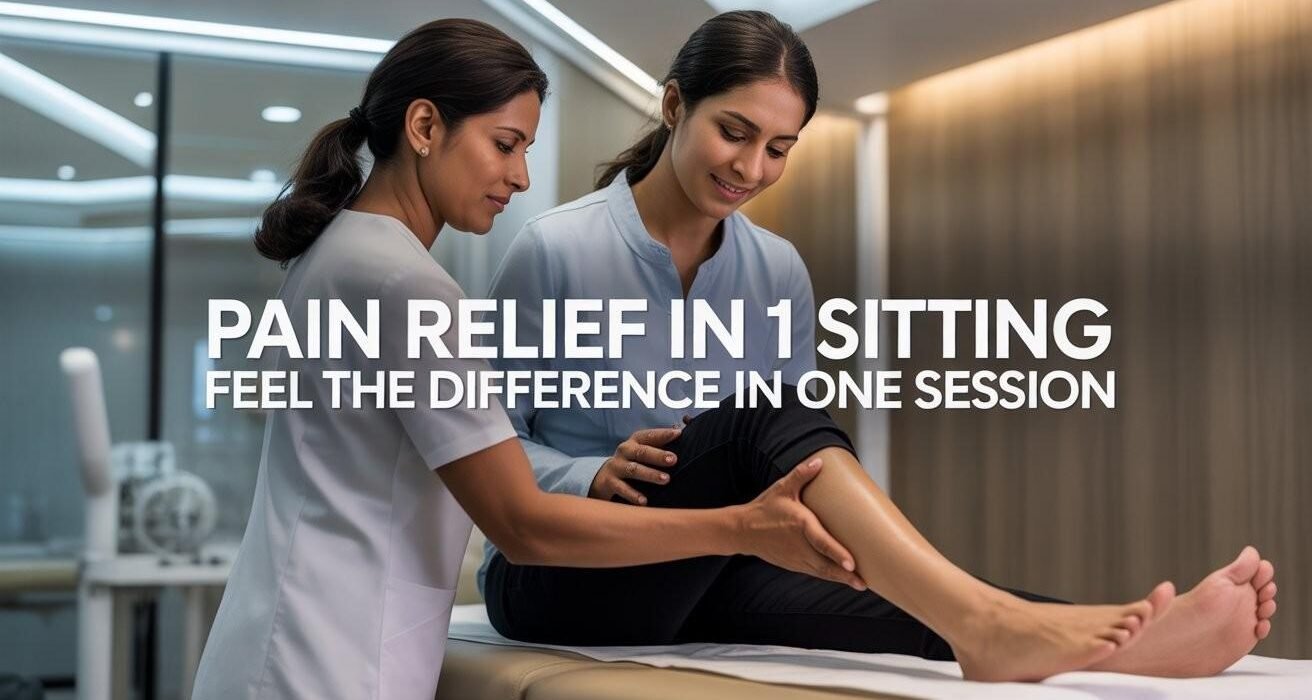
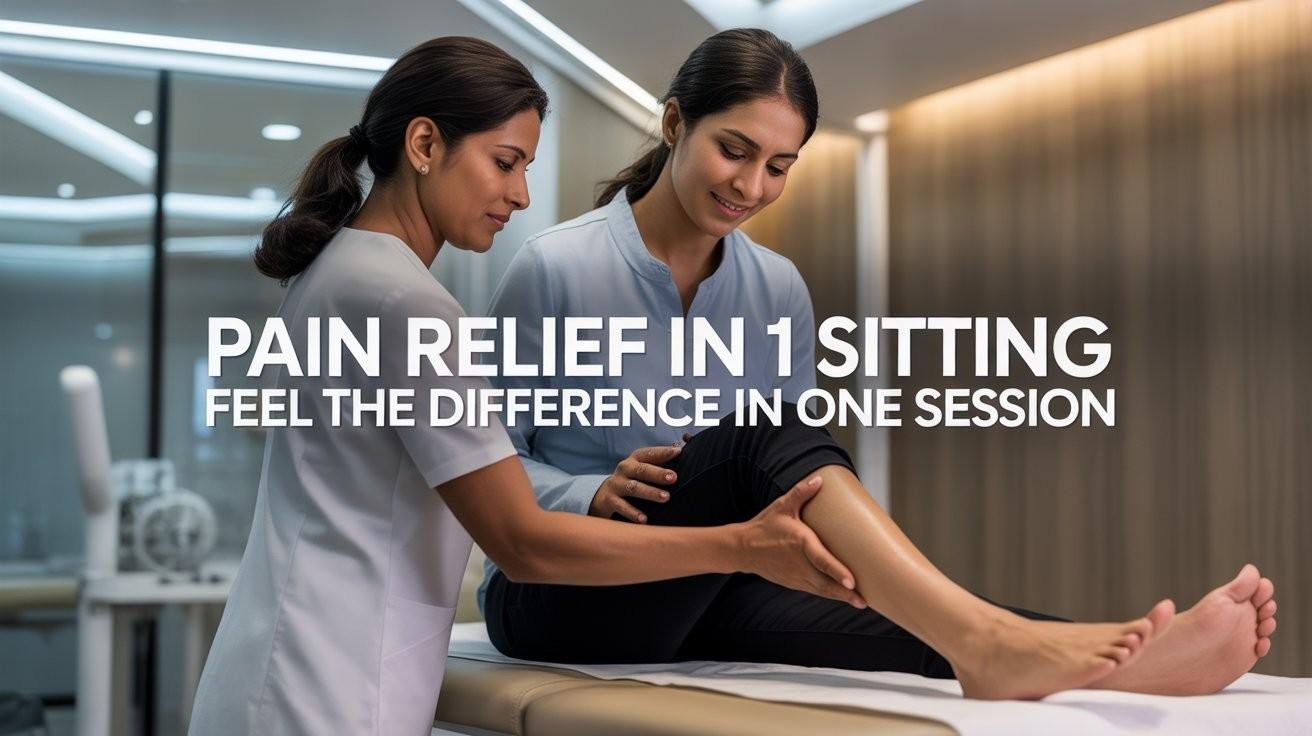
Physioveda India is here to change that. In fact, at our clinic, we promise “Pain relief in one sitting,” and you will “Feel the difference in one session.” Our advanced, result-driven approach – built on our proprietary PPCM™ (Posture Correction Matrix) – tackles the root causes of your knee pain. In this guide, we’ll walk you through what an ACL tear means, how it impacts your life, and why expert physiotherapy in Delhi is absolutely critical for recovery. We’ll explain exactly how our team at Delhi’s best physiotherapy clinic delivers rapid relief and lasting results, so you can get back to life pain-free.
Understanding the Physiotherapy for ACL Tear in Delhi
Physiotherapy for ACL Tear in Delhi
Physiotherapy for ACL Tear in Delhi. The anterior cruciate ligament (ACL) is one of the key stabilizers inside your knee. It connects your thigh bone (femur) to your shin bone (tibia), helping control forward movement of the shin and rotation of the knee. You can think of it as a strong strap inside your knee that holds everything together. ACL injuries most commonly happen during sudden stops, twists, or awkward landings – typical in sports like football, badminton, tennis or even intense gym workouts.
When that ligament snaps, many people hear or feel a “pop” at the moment of injury. Immediately, the knee often swells and becomes very painful – so much so that you might not be able to bear weight on it. The knee can feel unstable, as if it’s going to give out under you. ACL injuries are relatively common among active people and athletes, and studies note that women may be 2–8 times more likely to tear an ACL than men. (This is due to anatomical and hormonal factors that affect knee stability.) However, anyone can get an ACL tear – whether you’re a cricket player turning sharply to chase a ball, a child jumping off the sofa, or a Delhi resident tripping on a curb. The important thing is that an ACL tear is a serious knee injury that needs careful attention.
Symptoms & Daily Life Impact of Physiotherapy for ACL Tear in Delhi

Physiotherapy for ACL Tear in Delhi
Physiotherapy for ACL Tear in Delhi. An ACL tear doesn’t just hurt; it can completely disrupt your life. Common symptoms include:
- A loud “pop” or popping sensation in the knee at the time of injury.
- Immediate swelling and severe pain, making it difficult to continue activity.
- Instability or a feeling of “giving way” whenever you step or stand on that leg.
- Loss of range of motion, so you may not be able to fully straighten or bend the knee.
- Persistent discomfort when walking, climbing stairs, or kneeling.
Everyday tasks become challenging. Patients describe limping through Connaught Place or clutching the railing on the Metro stairs because the knee feels unreliable. Sleeping through the night can be tough when pain wakes you each time you shift position. You might catch yourself avoiding sports and exercise, scared that any pivot or sudden move will hurt or cause the knee to buckle. Many people in Delhi have told us they even worry about simple joys – playing cricket in the park, going to the gym, or running after their children. They feel frustrated and scared, wondering if their knee will ever feel normal again.
We want you to know: you’re not alone. We have treated countless Delhi patients who felt exactly this helplessness. For example, one of our patients, a 30-year-old banker from Vasant Vihar, injured her ACL playing badminton. She was limping so badly that she could barely cross the road in front of her house. After just one session at Physioveda, she told us, “I can already feel a big difference”. Stories like hers fuel our mission: to bring Delhi patients from fear to confidence, one session at a time.
Why Physiotherapy for ACL Tear in Delhi is Critical
Physiotherapy for ACL Tear in Delhi. You might wonder, “Do I really need physiotherapy after an ACL tear? Can’t I just rest or rely on surgery?” The answer is: physiotherapy is absolutely essential for the best recovery, whether or not you have surgery. In fact, research makes it clear: “With or without surgery, rehabilitation is critical to recovering leg strength and functional control” after an ACL injury. In other words, skipping rehab can keep your knee weak and unstable – and even increase the risk of further injury or arthritis down the line.
Here’s why: An ACL tear causes immediate swelling and pain, which reflexively ‘shuts down’ your thigh muscles (especially the quadriceps). This phenomenon, called arthrogenic muscle inhibition, means your muscles won’t fire properly on their own after injury. Without focused physiotherapy, your knee can remain stiff, weak, and unstable.
Generic advice or home exercises are usually not enough. Only a targeted, expert-led rehab program will retrain those muscles and restore proper movement. At Physioveda, we make sure to “wake up” your muscles early on using specific techniques (like neuromuscular electrical stimulation, NMES) so you can start putting weight on the knee safely. We follow proven protocols – first reducing swelling and pain, then gently restoring motion and muscle firing. Simply put, professional physiotherapy bridges the gap between injury and recovery. It’s like having a custom roadmap back to full strength.
Moreover, working with skilled therapists can prevent bad compensations. Without guidance, you might start favoring other muscles (hips, opposite leg) in a way that leads to new issues. Our team ensures balanced, safe movement. Evidence also shows that proper rehab can reduce the likelihood of re-tearing the ACL or injuring other structures in the knee. At Physioveda, we’ve seen too many patients who delayed rehab only to end up needing surgery later. We want to help you avoid that. Early, expert physiotherapy is the best way to protect your knee’s long-term health.
Physiotherapy for ACL Tear in Delhi
How Physioveda Treats Physiotherapy for ACL Tear in Delhi
Physiotherapy for ACL Tear in Delhi. When you choose Physioveda India for an ACL tear, you’re getting far more than basic exercises. We are Delhi’s best physiotherapy clinic for knee injuries because of our advanced, result-driven, and personalized approach. Here’s how we treat your ACL recovery:
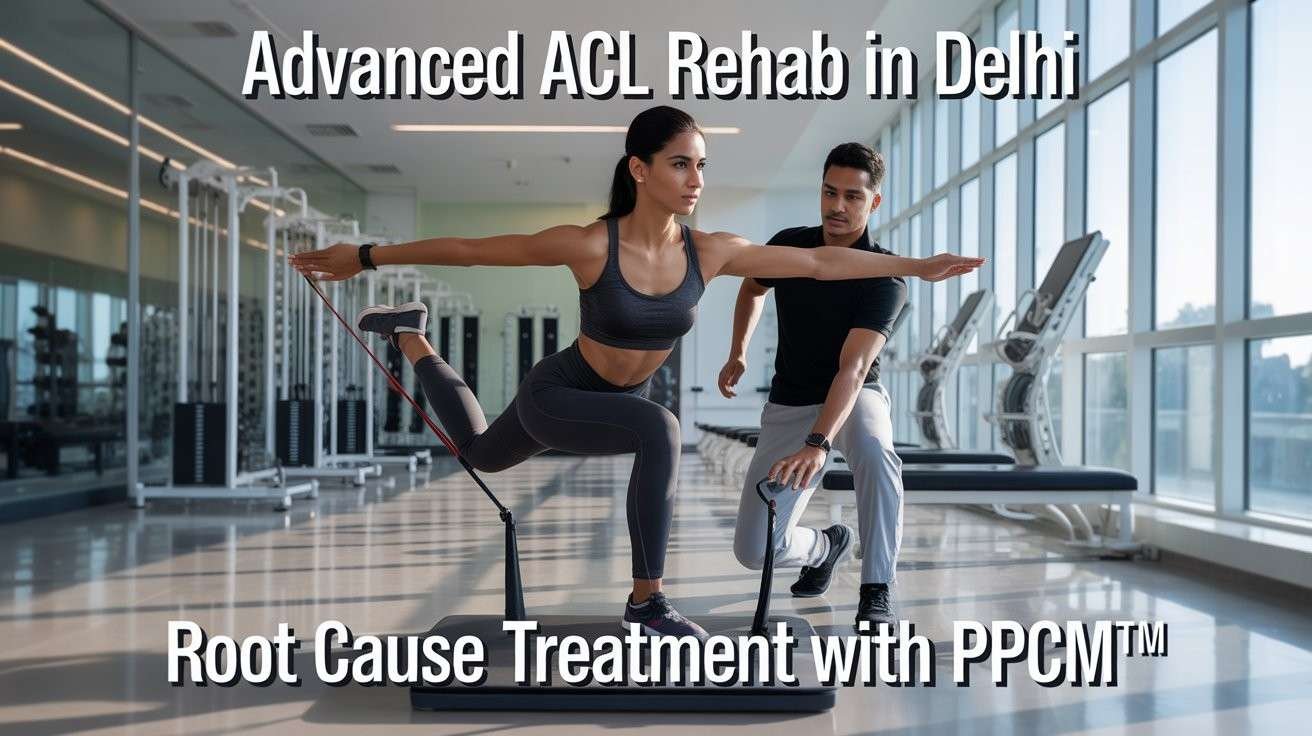
Root-Cause Focus with PPCM™ – First, we understand the entire system. Our PPCM™ (Posture Correction Matrix) digs into underlying issues. For instance, a slight uneven hip height or ankle imbalance can place extra stress on the knee. We assess your full posture, gait, and movement patterns. If your pelvis is tilted or your foot arch collapsed, we correct it. Think of it as fixing the foundation, not just the wall. This comprehensive view is unique to Physioveda; most clinics only look at the knee. By treating posture and alignment first, we prevent problems from returning and speed up healing.
Immediate Pain Relief Techniques – From session one, we aim to deliver pain relief in one sitting. Our experts use advanced manual therapy (hands-on) techniques: gentle joint mobilizations, soft tissue and fascia release, and if needed, dry needling. These quickly calm pain and reduce tension. We often combine these with cutting-edge modalities. For example, we apply neuromuscular electrical stimulation (NMES) pads to the thigh to “wake up” your quadriceps muscles. Studies confirm this approach can overcome muscle shutdown after ACL tears, helping you regain strength. Patients often feel a noticeable ease in their knee as soon as we use these tools.
Targeted Strengthening & Stability – Once pain is controlled, we custom-design your exercise program. Based on your assessment, we’ll focus on the muscles that protect the ACL. Typically, we build quadriceps strength first, then target hamstrings, glutes, and core. Every exercise is controlled and monitored. For example, if your knees tend to collapse inward, we teach proper squat and lunge form. We use equipment like resistance bands, weights, balance boards, and even our facility’s anti-gravity treadmill if needed. Throughout, we ensure you activate the right muscles – no guesswork. Research notes that “targeted exercises and functional training enhance knee stability, strength, and proprioception”, exactly what we deliver.
Balance, Gait, and Functional Training – An ACL injury can throw off your walking pattern. You might limp or rely too much on one side. We correct this with gait training and balance drills. You might start by walking on a treadmill under supervision to ensure your stride is even. We also incorporate proprioceptive exercises (e.g., standing on one leg on a foam pad) to rebuild that sensory feedback. As you progress, we simulate real-life tasks: stepping on and off platforms, safe landing techniques, or sport-specific drills. For instance, a young football player in our clinic practiced controlled pivot drills; a weekend badminton player worked on lunges with a shuttlecock. By the end of your rehab, activities like jogging, jumping, and changing direction will feel secure again.
Personalized Care & Education – At Physioveda, we treat you as an individual, not a case number. Your therapy plan is dynamically adjusted each session. We educate you along the way: why each exercise matters, how to avoid common mistakes, and how to support your recovery at home. We emphasize long-term health. For example, if your work involves long sitting hours, we might prescribe daily stretches for your hip and lumbar spine to keep the knee happy. By the time you finish rehab, you’re not just healed – you’re empowered with knowledge to prevent future injuries.
Throughout your journey, remember our slogans “pain relief in one sitting” and “feel the difference in one session.” Many patients are amazed that after just one appointment, they already feel less pain and more confidence. Because our techniques are advanced and evidence-based, results come faster. But make no mistake – we also have patience. True recovery happens in stages. We won’t rush you back to sports until it’s safe, but we will make each stage as swift and comfortable as possible.
Phases of Physiotherapy for ACL Tear in Delhi
Physiotherapy for ACL Tear in Delhi
Physiotherapy for ACL Tear in Delhi is a clear journey through stages. At Physioveda, we guide you step by step, making sure each phase is complete before moving on:
Phase 1 – Acute Stage (0–2 weeks): Right after the injury or surgery, our priority is pain and swelling control. We start gentle range-of-motion exercises (like heel slides) to prevent stiffness, and we apply ice and compression as needed. If you’re post-surgery, we follow protocols to protect the graft. Our therapists teach you how to do safe quad sets (tightening the thigh muscle) and ankle pumps to keep blood flowing. We also correct any limp immediately by working on crutch-walking mechanics or initial weight-bearing. The goal: reduce swelling and maintain as much motion and muscle activation as possible. A structured program matters, because even at this early stage, inactivity can allow stiffness to set in.
Phase 2 – Mobility and Activation (2–6 weeks): Swelling should be down by now, and we focus on regaining full motion. We use hands-on stretches and devices like a stationary bike (without resistance) to encourage bending. We push to achieve full knee extension (straightening); if you can’t fully straighten by about 3-4 weeks, we address it aggressively, since lack of extension can hamper later progress. Meanwhile, we intensify muscle activation: more NMES, more quad exercises (straight leg raises in various planes), and start light hamstring work. We also evaluate your standing posture and begin balance exercises (like single-leg stands) as you tolerate weight-bearing. You’ll notice your walking improving week by week. One thing to remember: as an orthopedic specialist in Delhi notes, “full return to sport usually takes months, not weeks”. This gradual approach protects your knee’s long-term outcome.
Phase 3 – Strength Building (6–12 weeks): With good motion and control achieved, we add resistance. We prescribe strength exercises that mimic daily life: squats to chair height, step-ups, controlled lunges. We ensure your form is perfect so the stress goes where it should (hips and knees together). We incorporate gym equipment if needed – leg press machines, hamstring curls, and theraband work for hip abductors. Importantly, we keep challenging your proprioception: using wobble cushions, balance boards, or even walking on uneven surfaces to teach your knee how to stabilize on its own. At this stage, many patients will also start light jogging (if surgery was done, usually around 10–12 weeks). But we only allow that once swelling is minimal and strength is at least 70–80% of the other leg.
Phase 4 – Functional and Sport-Specific (3–6 months+): This is where rehab becomes fun and personalized. For an office worker, we might simulate squatting to pick up objects safely or training posture for all-day sitting. For an athlete, we do cutting drills, jumps, and quick direction changes. Each exercise is tailored to what you want to get back to. We also do a lot of education on injury prevention: teaching you how to land from a jump, how to engage your core when moving, and when to listen to pain. By about 4–6 months, many of our ACL patients can return to sport with full confidence.
Throughout these phases, our therapists track your progress meticulously. If a milestone isn’t met, we modify the plan – for example, adding extra pain-relief sessions or swapping in new exercises. We celebrate each achievement: from straightening your knee fully to squatting below parallel without wincing.
We also set realistic expectations. The structured timeline prevents setbacks: as one Delhi orthopedic surgeon warns, pushing too fast (“feeling better is not the same as being ready”) can cause a relapse. Instead, our step-by-step plan protects the outcome. You’ll improve steadily, and often at each session you’ll say, “Wow, my knee feels stronger than before.” That’s the powerful combination of science-based care and a patient-first mindset.
Why Physioveda is the Best Choice for Physiotherapy for ACL Tear in Delhi
Physiotherapy for ACL Tear in Delhi
There are other clinics, but Physioveda stands apart as Delhi’s leading ACL and knee rehab center. Here’s why patients trust us:
Expert Team of Physiotherapists: Our specialists have decades of combined experience in sports injury rehab. They continually update with the latest research (for example, on optimizing neuromuscular control after ACL tears). Many have been featured in medical journals and consulted by top surgeons. In short, you’re in expert hands.
Advanced Techniques & Equipment: We live our slogan “pain relief in one sitting.”. Our manual therapy methods (like skilled joint mobilizations) quickly ease pain. Our electrotherapy (ultrasound, TENS, NMES) is state-of-the-art – far beyond what basic physiotherapy centers offer. In fact, one study on ACL rehab emphasizes exactly our focus: “through targeted exercises and functional training, physical therapy enhances knee stability, strength, and proprioception”. We embody that principle with cutting-edge tools and protocols.
Proven Root-Cause Approach (PPCM™): We are one of the few clinics in Delhi to systematically correct posture and biomechanics as part of injury rehab. If your pelvis, spine, or ankles are misaligned, the knee will never be fully well. Our PPCM™ method addresses those hidden issues. For example, if your hip rotates slightly outward due to desk work posture, we correct it, removing undue stress from your ACL. This comprehensive care prevents recurrence and delivers truly long-term results.
Personalized, Patient-Centered Care: You are not treated like “just another patient.” We listen to your goals – whether it’s running a marathon or simply playing with your kids – and tailor every session to get you there. We also emphasize education: at Physioveda, you learn how to care for your knee, reduce risk, and maintain good posture in everyday life. The outcome is a patient who feels empowered and confident, not just healed.
Outstanding Results & Reputation: Over the years we’ve helped thousands of ACL patients in Delhi and NCR. Our protocols align with global best practices – many orthopedic surgeons refer to us because they trust our outcomes. We often hear colleagues say, “Physioveda patients come back stronger and faster.” We proudly live up to our name as Delhi’s best physiotherapy clinic for sports injuries.
When you combine these strengths, it’s clear why we repeatedly deliver on our promises. Patients often report feeling almost “miraculous” improvement – a testament to our expertise and commitment. At the end of the day, our goal is simple: we want you to feel the difference in one session.
Transformation Story of people for Physiotherapy for ACL Tear in Delhi
Physiotherapy for ACL Tear in Delhi
Consider the journey of one recent patient, Raj, a 28-year-old gym enthusiast from Gurgaon. Raj tore his ACL playing football in Delhi, and was devastated. He hobbled into our clinic with a swollen knee and no faith it could heal. He told us he felt embarrassed and anxious, fearing he might never squat or run again.
In his first session, after our initial assessment, we applied manual therapy and NMES. By the end of that session, Raj exhaled deeply, saying, “Wow, I can move my knee better already.” In the following weeks, we guided him through every phase: reducing swelling, restoring his full knee bend, and slowly rebuilding his leg strength.
Six months later, Raj is back on the football field – better than before. He made a big tackle in a weekend match last month and exclaimed, “I wouldn’t have even attempted that a year ago!”. He says the transformation at Physioveda felt “like night and day.” Now he sleeps soundly, jogs without pain, and coaches younger players on proper knee care. Raj’s story is just one of many: from hopelessness to confidence, thanks to our focused care.
Hearing success stories like Raj’s reminds us why we do what we do. If you come in feeling limited and afraid, we’ll make sure you leave feeling empowered and pain-free.
Book Your Physiotherapy for ACL Tear in Delhi Now
Physiotherapy for ACL Tear in Delhi
Physiotherapy for ACL Tear in Delhi. Don’t let an ACL tear hold you back any longer. At Physioveda India, we’re ready to give your knee the expert care it needs. Remember, with us, “Pain relief in one sitting” is our promise. You will feel the difference in just one session as we start guiding you back to your normal life.
Book an appointment today at our Vasant Vihar clinic – conveniently serving Delhi and NCR. We offer flexible scheduling, including evenings and weekends, to fit into your busy life. Whether you’re an athlete, a desk-bound professional, or an active parent, we tailor your program to your needs.
Contact us now and experience Delhi’s best physiotherapy for ACL tear in Dehli. Imagine climbing stairs, running, or simply walking around your neighborhood without fear of knee pain again. Our team is here to make that your reality.
 Call or visit Physioveda India today. Feel the difference in one session – because your journey to recovery deserves the city’s top expert care.
Read our previous blog for post-surgery physiotherapy
Visit our Instagram