

Postnatal Physiotherapy in Delhi — Expert Postpartum Rehabilitation at PhysioVeda India

Childbirth does not end at discharge, and recovery does not fit neatly into a single six-week check. After a vaginal delivery or C-section, the body is still adapting across the pelvic floor, abdominal wall, scar tissue, breathing mechanics, posture, bladder and bowel control, sleep, and return to activity. Major guidelines now frame postpartum care as an ongoing process rather than a one-time visit, with early contact after birth and continuing review over the weeks that follow. At PhysioVeda India, postnatal physiotherapy in Delhi should be approached with that same seriousness: not as an optional extra, but as structured rehabilitation designed around how your body delivered, what symptoms you have now, and what you want to return to next. If you are leaking, feeling pelvic heaviness, struggling with pain, worried about diastasis recti, or unsure when exercise is safe again, this is the stage of recovery where specialist physiotherapy can make a measurable difference.
Why postnatal physiotherapy in Delhi matters after every delivery
A routine postnatal medical review is important, but it is not the same as a pelvic-health or musculoskeletal rehabilitation assessment. Standard postpartum follow-up often focuses on general recovery, wound or stitch healing, bleeding, blood pressure, feeding, mood, and contraception. Specialist physiotherapy adds another layer: how well the pelvic floor is functioning, whether the abdominal wall is transferring load, whether scars are restricting movement, whether the bladder and bowel are working normally, and whether the body is actually ready for rising physical demands. That difference matters because postpartum symptoms are common. Urinary incontinence affects roughly one in four women after birth in pooled analyses, and pelvic-floor symptoms are common enough that pelvic-health experts routinely describe them as “common, but not normal,” meaning widespread does not mean something you should simply accept.
At PhysioVeda India, that means postnatal physiotherapy in Delhi should not be reserved only for severe cases. It is relevant for women after an uncomplicated birth, after forceps or vacuum-assisted delivery, after perineal tears, after C-section, after twin pregnancy, after difficult breastfeeding posture-related pain, and after a delayed or uncertain return to exercise. The point of good rehabilitation is not to medicalize normal recovery; it is to identify what is healing well, what needs support, and what should be progressed carefully rather than guessed. That is especially important when the goal is not merely “feeling okay,” but returning confidently to lifting, caring for a baby, sleeping in awkward positions, working, training, and having sex without pain or fear
What a proper postnatal physiotherapy in Delhi assessment should include
An effective postnatal physiotherapy in Delhi assessment begins with your history, because delivery details meaningfully change the rehabilitation plan. At PhysioVeda India, a postnatal physiotherapy assessment in Delhi should ask about delivery type, whether instruments were used, whether you had tearing or episiotomy, how a C-section scar is healing, whether you feel pressure or heaviness, whether you leak urine or stool, whether bowel motions are difficult, whether intercourse is painful, how sleep and feeding posture are affecting pain, and what exercises or activities you want to restart. Mood and emotional well-being also matter in postpartum care, and structured screening tools such as the Edinburgh Postnatal Depression Scale are commonly used in postpartum settings to help identify women who may need further support.
The physical examination should then move beyond a quick visual check. It should look at posture, breathing strategy, ribcage and abdominal movement, lumbar and hip mobility, tender areas around the low back and pelvis, scar sensitivity or tightness, and functional patterns such as sitting, standing, walking, coughing, lifting, and getting up from the floor. If pelvic-floor symptoms are present or if you are returning to higher-load activity, a specialist may also recommend an internal pelvic-floor assessment with consent. NICE specifically recommends digital assessment to confirm pelvic-floor muscle contraction before supervised pelvic-floor muscle training for urinary incontinence. That matters because the treatment is not always “do more Kegels.” Some women cannot generate a useful contraction. Some can squeeze but not relax. Some compensate with glutes, abdominals, or breath-holding. The value of assessment is that it prevents the wrong exercise from being prescribed to the wrong problem.
At PhysioVeda India we do postnatal physiotherapy in Delhi , the most trustworthy message to give patients is simple: every postnatal plan should be individualized. The right plan for a woman with mild stress leakage and no pain is not the same as the plan for a woman with a C-section scar, abdominal doming, coccyx pain, and fear about returning to exercise. Nor is it the same as the plan for a woman after a third- or fourth-degree tear involving the anal sphincter. RCOG guidance on obstetric anal sphincter injury makes clear that these injuries need appropriate follow-up and graduated return to activity, which is another reason why a generic postpartum handout is often not enough.
Pelvic floor recovery, bladder control, bowel symptoms, and prolapse postnatal physiotherapy in Delhi
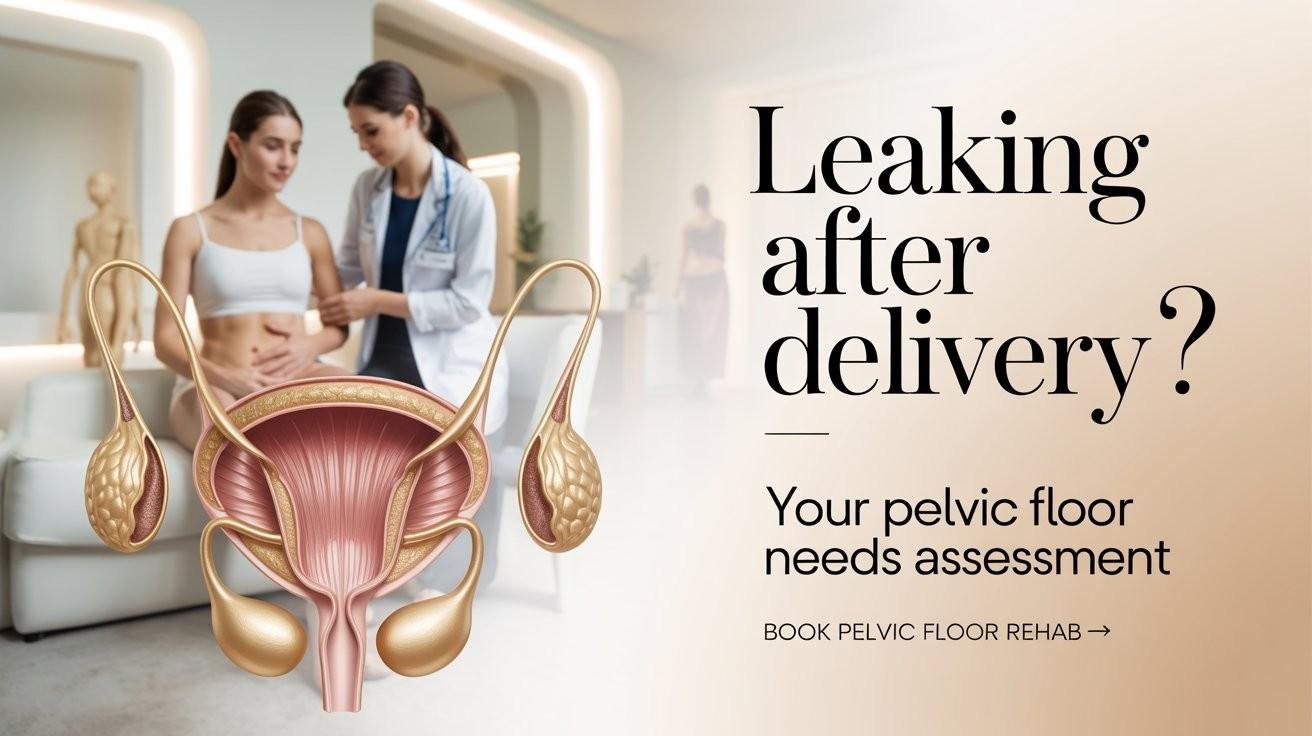
postnatal physiotherapy in Delhi. Pelvic-floor rehabilitation is a cornerstone of postnatal physiotherapy in Delhi because the pelvic floor sits at the intersection of continence, pelvic support, sexual function, and confidence with movement. NICE recommends supervised pelvic-floor muscle training for at least three months as first-line treatment for stress or mixed urinary incontinence, and it recommends a minimum three-day bladder diary during assessment. For women with symptomatic early prolapse, NICE recommends supervised pelvic-floor muscle training for at least sixteen weeks as a first option for stage 1 or stage 2 prolapse, and it also allows pessary use for symptomatic prolapse. The key point for patients is that pelvic-floor treatment is structured, progressive, and evidence-based. It is not just a vague instruction to “squeeze more”.
At PhysioVeda India, pelvic-floor physiotherapy in Delhi should therefore be framed around function. If you leak when coughing, sneezing, laughing, lifting, or jogging, the issue may be strength, timing, or pressure management. If you feel urgency and cannot defer the urge to urinate, the issue may involve bladder retraining alongside pelvic-floor work. If you feel heaviness, dragging, or a bulge, prolapse assessment matters. If bowel motions involve straining, incomplete emptying, pain, or fear, the plan may need bowel habit coaching, toilet-position advice, breathing retraining, and pelvic-floor coordination work as much as “strengthening.” Quality pelvic-floor rehab is about deciding which of these patterns is actually present, then matching treatment to that pattern.
This is also where specialist skills matter. NICE does not recommend biofeedback or electrical stimulation as routine care for everyone, but it does allow them to be considered in women who cannot actively contract the pelvic floor, particularly to improve motivation and adherence. In practical clinic terms, that means these tools can be useful—but selectively, not automatically. At PhysioVeda India, that is the most credible way to explain them: as targeted adjuncts when the assessment shows they are likely to help, not as “advanced treatment” theatre. That kind of honesty builds trust, and it is especially important in postpartum care, where women are often already overwhelmed and do not need overcomplication disguised as sophistication.
Diastasis recti, core control, and C-section recovery for postnatal physiotherapy in Delhi
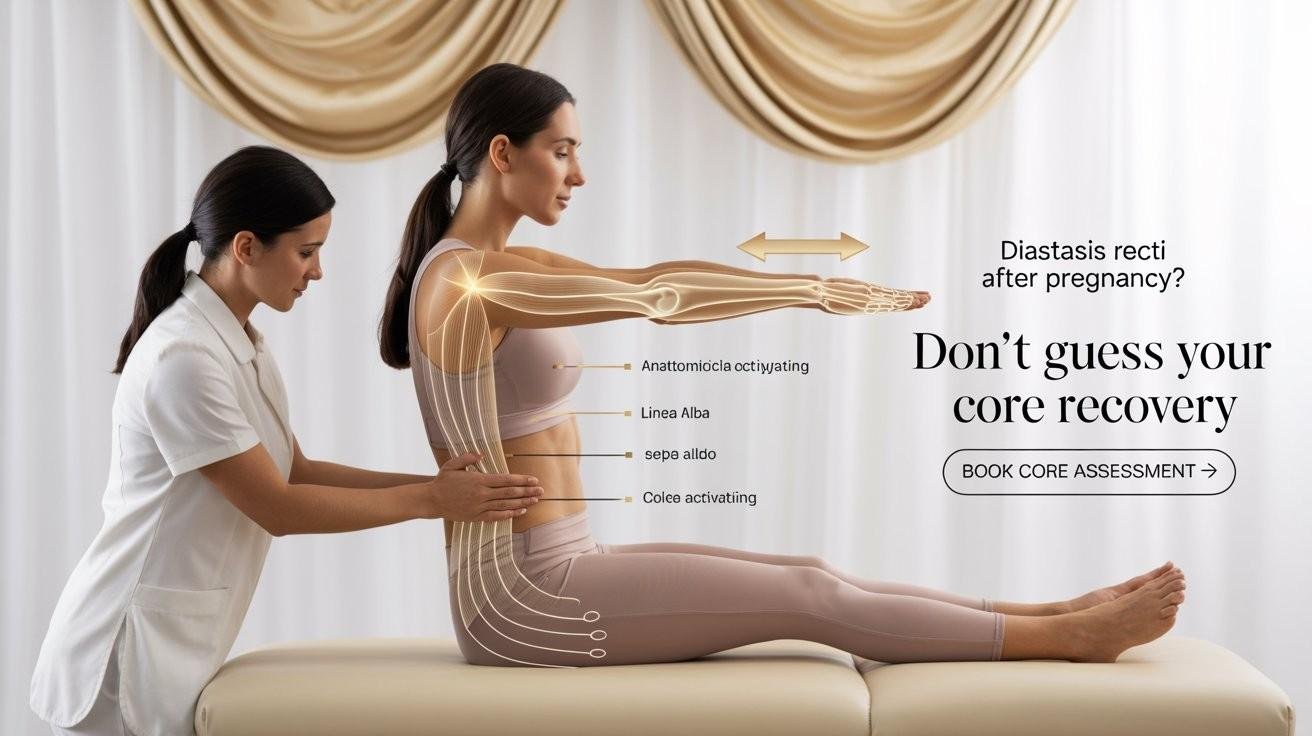
Postnatal physiotherapy in Delhi. Few postpartum concerns are more misunderstood than diastasis recti. Broadly, it refers to widening along the midline connective tissue of the abdominal wall rather than a dramatic “split” of the muscles themselves. It is extremely common in late pregnancy and then tends to reduce over time after birth; one recent review reported very high prevalence late in pregnancy with meaningful improvement across the first postpartum months. That is why the presence of a gap alone is not the whole story. What matters clinically is how the abdominal wall behaves under load: whether you can breathe well, transfer force, control pressure, and move without doming, strain, or pain.
Ultrasound imaging is useful here because it is a reliable way to measure inter-rectus distance in postpartum women when performed well, and it can add objectivity to progress tracking [9]. At the same time, current research does not show one universally superior diastasis exercise recipe for every woman. Recent reviews emphasize that exercise is the standard conservative approach, but the evidence on the perfect routine remains mixed. That means personalized loading progressions are more defensible than a rigid, one-size-fits-all “diastasis program”. At PhysioVeda India, the most credible approach is to assess breathing, deep abdominal activation, trunk control, daily-task tolerance, and symptom response, then build from low-load control toward higher-load strength if the body is handling it well.
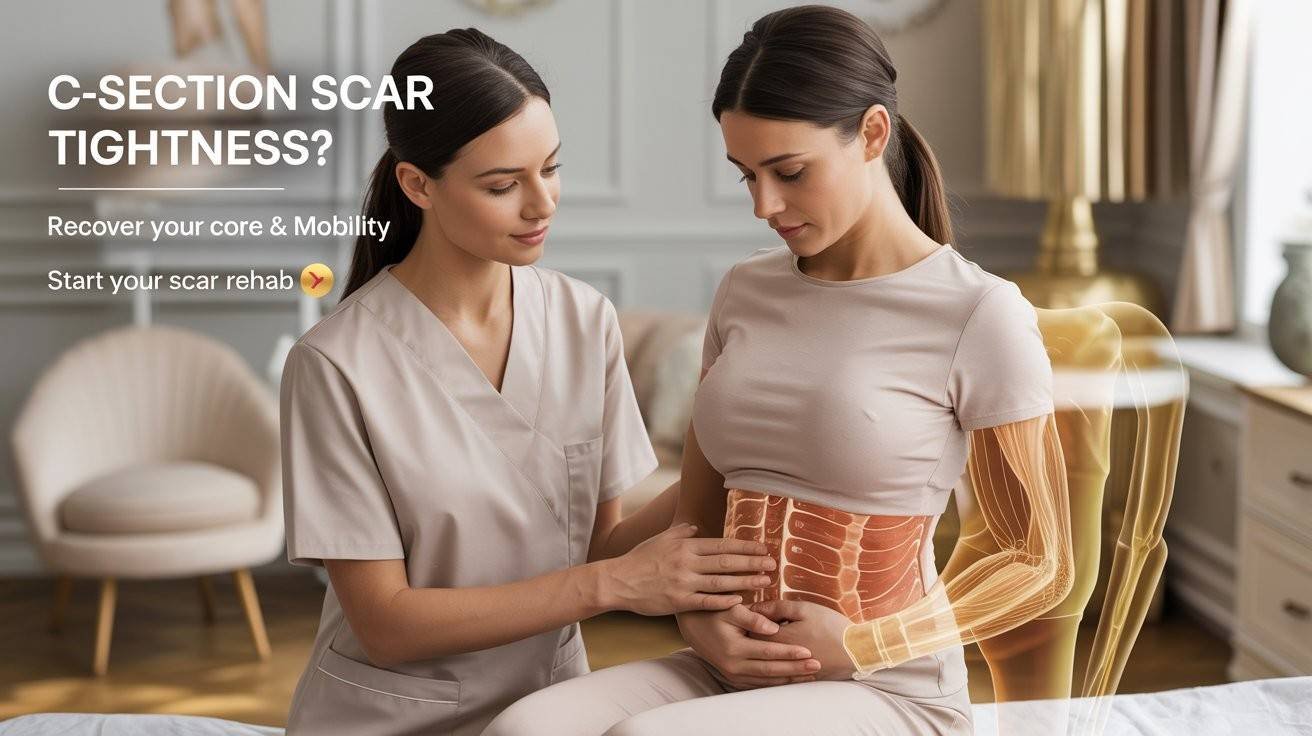
C-section recovery follows the same principle of layered assessment. A scar may look healed on the surface while still feeling tight, numb, sensitive, or mechanically restrictive. Recovery also involves abdominal wall strength, fascial mobility, posture, breathing, constipation avoidance, and confidence with movement. Good C-section rehab, therefore, goes beyond waiting for the wound to close. It includes scar education, gradual desensitization, safe progression of abdominal loading, and a return to lifting, rolling, carrying, and exercise that does not provoke guarding or pressure symptoms. Rather than promising dramatic scar “fixes,” the stronger patient message is that specialist physiotherapy can help improve mobility, comfort, body awareness, and return-to-function after C-section when guided by symptoms and stage of healing.
Returning to exercise after childbirth without guessing for postnatal physiotherapy in Delhi
Postnatal physiotherapy in Delhi. One of the most useful parts of specialist postnatal physiotherapy is removing the guesswork from exercise return. The popular idea that “six weeks means fully cleared” is too simplistic. A medical review may confirm that initial healing is progressing, but that does not automatically tell you how your pelvic floor behaves under impact, whether your abdominal wall is coping with load, or whether your running mechanics are ready for high-force repetition. The widely used 2019 Goom-Donnelly-Brockwell postnatal return-to-running guideline recommends a low-impact exercise phase in the first three months postpartum and advises that return to running is not advisable before three months, or later if symptoms of pelvic-floor dysfunction are present.
For patients, that translates into a simple decision rule: progress by function, not just calendar weeks. If you leak, feel heaviness, develop abdominal doming, notice pelvic or low-back pain, or cannot comfortably walk, lift, and manage daily tasks, your body is asking for further rehabilitation before impact. A safe progression usually starts with breathing, pelvic-floor awareness, walking, mobility, and low-load strength, then moves toward heavier and faster work only when symptoms remain settled. At PhysioVeda India, this is where assessment-led rehabilitation is far more useful than social-media templates or generic postpartum workouts.
Painful intercourse, pelvic pain, and when to seek help for postnatal physiotherapy in Delhi
Painful intercourse after childbirth is more common than many women are told. A systematic review and meta-analysis reported an overall postpartum dyspareunia prevalence of about 35%, with rates tending to decrease over time but remaining clinically important for many women. Common contributors include perineal scar sensitivity, pelvic-floor overactivity, dryness, fear of pain, and unresolved pelvic or abdominal tension. This is not a problem women should be told to “just wait out.” It is a legitimate rehabilitation issue, and it belongs in a full postpartum assessment.
The same goes for persistent low-back pain, sacroiliac pain, pubic symphysis pain, tailbone pain, heaviness, leaking, bowel difficulty, or fear of exercise months after delivery. These problems are not a sign that you have failed recovery; they are a sign that recovery may need more targeted input. At PhysioVeda India, the strongest clinical message is not that every symptom is severe. It is that unresolved postpartum symptoms deserve the same attention you gave pregnancy care in the first place. That is what specialist postnatal physiotherapy in Delhi is for: not panic, not over-treatment, but structured, person-specific rehabilitation that helps you understand what is happening and what to do next.
Book your postnatal physiotherapy in Delhi at PhysioVeda India
If you delivered recently and something still feels “off,” or if you delivered months ago and assumed the symptoms would disappear on their own, this is the right moment to get assessed. Postnatal physiotherapy in Delhi should help answer practical questions: Why am I leaking? Why does my scar still feel strange? Is this abdominal doming normal? Why do I feel heaviness? When can I return to exercise safely? Why is sex painful? At PhysioVeda India, a strong postnatal recovery plan should begin with those questions and build outward from the answers.
Your recovery does not need to wait until symptoms become severe. And it does not need to be reduced to a generic sheet of exercises. A careful assessment, a clear explanation, and a staged plan are often what turn uncertainty into progress. If you are looking for postnatal physiotherapy in Delhi that is clinically grounded, locally relevant, and built around your actual recovery goals, book an assessment at PhysioVeda India and start with a plan that makes sense for your body now.
FAQS For postnatal physiotherapy in Delhi
When should I start postnatal physiotherapy after delivery?
Is postnatal physiotherapy needed after a C-section?
Can postnatal physiotherapy help with urinary leaking?
What is diastasis recti and how is it treated?
When can I return to exercise after childbirth?
Why choose PhysioVeda India for postnatal physiotherapy in Delhi?
To continue learning about advanced rehabilitation and movement recovery, explore our related guides on Physiotherapy for Parkinson’s Disease in Delhi, Post-Stroke Physiotherapy in Delhi, and Physiotherapy for ACL Tear in Delhi. You can also learn more about our specialist Sports Physiotherapy and Posture Correction Treatment services at PhysioVeda India. For daily recovery tips, health education, clinic updates, and expert physiotherapy awareness content, follow PhysioVeda India on Instagram. Your postnatal recovery deserves expert care, structured assessment, and the right clinical guidance — book your postnatal physiotherapy assessment with PhysioVeda India today.