
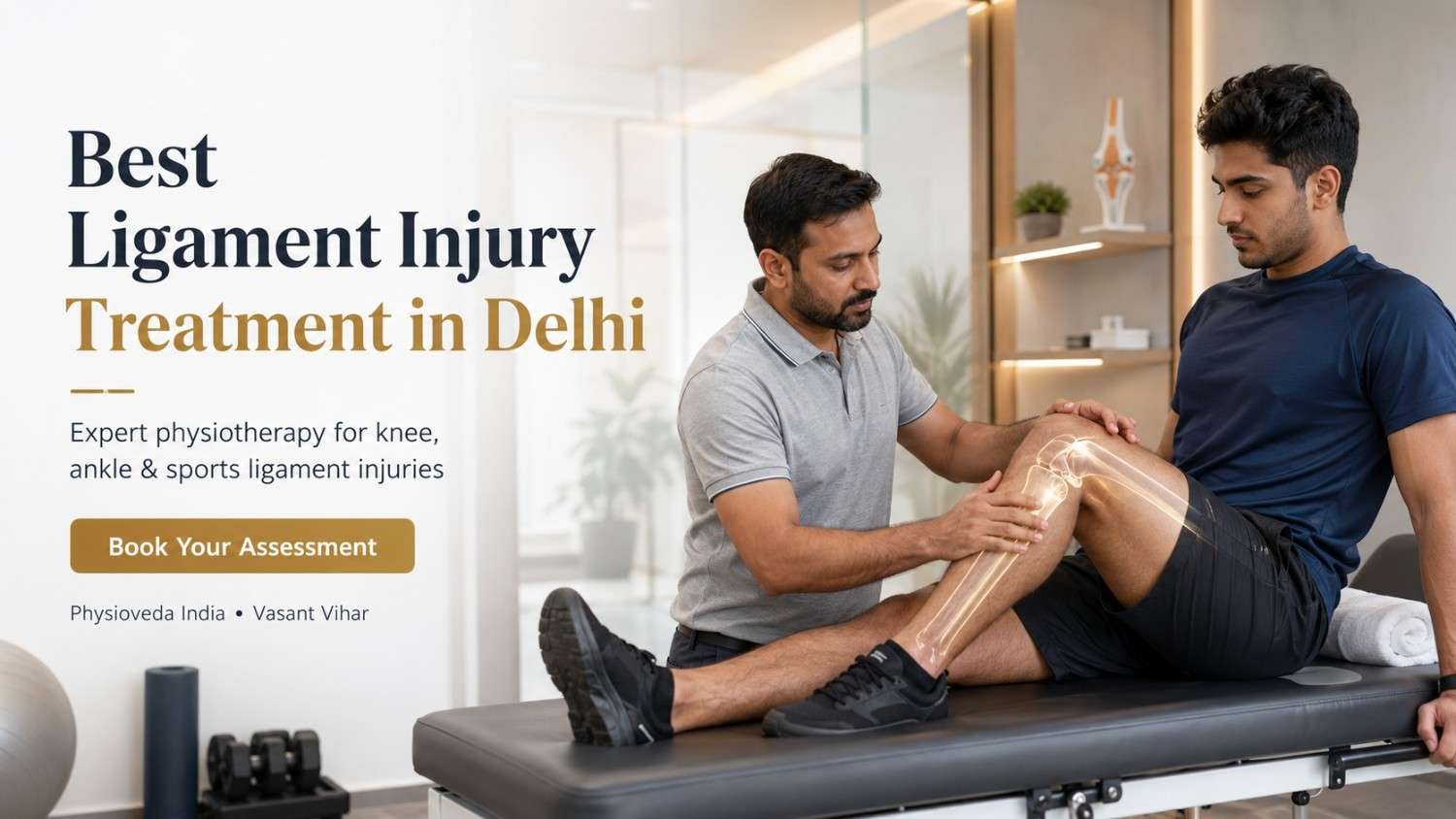
Best Ligament Injury Treatment in Delhi | Physioveda India
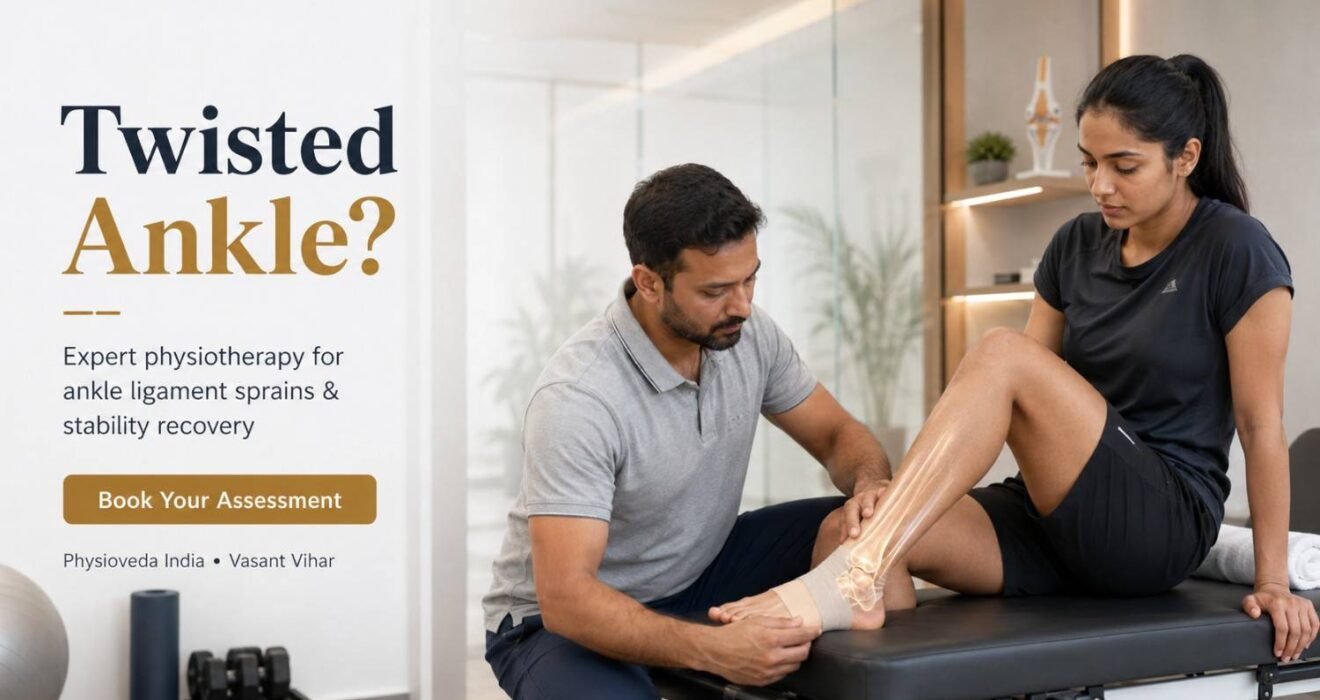
Best ligament injury treatment in Delhi. A sudden twist on a badminton court. A slip on wet stairs during Delhi’s monsoon. A sharp turn while playing cricket, football, tennis, or even getting down from a Metro staircase with a swollen ankle. Ligament injuries often happen in one quick moment, but if they are not managed properly, the pain, swelling, weakness, and instability can stay much longer than expected.
If you are looking for the Best ligament injury treatment in Delhi, the first step is not just pain relief. The real goal is to understand the grade of the injury, protect the joint, restore movement, rebuild strength, and help you return to daily life or sport with better confidence. At Physioveda India, Vasant Vihar, our approach is assessment-led, phase-wise, and focused on long-term joint stability.
Physioveda India, Vasant Vihar provides phase-wise physiotherapy for ligament injuries, including ACL, MCL, ankle sprains, shoulder, wrist and thumb ligament tears, with assessment, pain control, strengthening, balance training and safe return-to-activity planning.
Quick Answer: Which Is the Best Ligament Injury Treatment in Delhi?
Best ligament injury treatment in Delhi
The Best ligament injury treatment in Delhi is not one single machine, brace, injection, exercise, or painkiller. It is a structured clinical pathway: accurate assessment, injury grading, pain and swelling control, protected movement, progressive strengthening, balance training, and return-to-activity testing.
For patients in South Delhi and Delhi NCR, Physioveda India in Vasant Vihar is a strong choice because we focus on the full recovery journey, not only temporary symptom relief. Our team assesses knee, ankle, shoulder, wrist, thumb, and sports-related ligament injuries and builds a plan based on your pain level, joint stability, lifestyle, and activity goals.
If you are comparing ligament injury clinics, ask one question: will they only reduce pain, or will they also restore stability, strength, confidence, and safe movement? That difference matters.
What Is a Ligament Injury Treatment in Delhi?
Best ligament injury treatment in Delhi
A ligament is a strong band of tissue that connects bone to bone and helps keep a joint stable. When a ligament is overstretched, partially torn, or completely ruptured, it is called a sprain or ligament tear.
Mayo Clinic describes sprains as injuries where ligaments are stretched or torn, commonly causing pain, swelling, bruising, and limited movement. Mayo Clinic — Sprains
In clinic, I often explain it like this: muscles move the joint, but ligaments help control the joint. When a ligament is injured, the problem is not only pain. The joint may feel loose, unsafe, weak, or unreliable. That is why proper ligament injury physiotherapy Delhi patients can trust should include stability, balance, and movement control — not only massage or rest.
Grades of Ligament Injury. Mild Sprain to Complete Tear
The grade of injury decides the recovery plan. Two people can both say, “I twisted my ankle,” but one recovers in two weeks and the other struggles for months.
| Grade | What Happens | Common Symptoms | Approximate Recovery Time |
|---|---|---|---|
| Grade I — Mild Sprain | Microscopic stretching of ligament fibres | Mild pain, mild swelling, no major instability | Around 1–3 weeks |
| Grade II — Partial Tear | Partial tearing of the ligament | Moderate pain, swelling, bruising, some looseness | Around 3–6 weeks |
| Grade III — Complete Tear | Full rupture of the ligament | Marked instability, swelling, difficulty using the joint | 6 weeks to several months, longer if surgery is needed |
A Grade I injury may need guided care and progressive loading. A Grade II injury usually needs more structured rehab. A Grade III injury may require specialist evaluation, imaging, bracing, surgery in selected cases, or post-surgical rehabilitation.
So when someone searches for the Best ligament injury treatment in Delhi, the first step should be proper diagnosis and grading. Without that, treatment becomes guesswork.
Best ligament injury treatment in Delhi
Common Causes of Ligament Injuries in Delhi
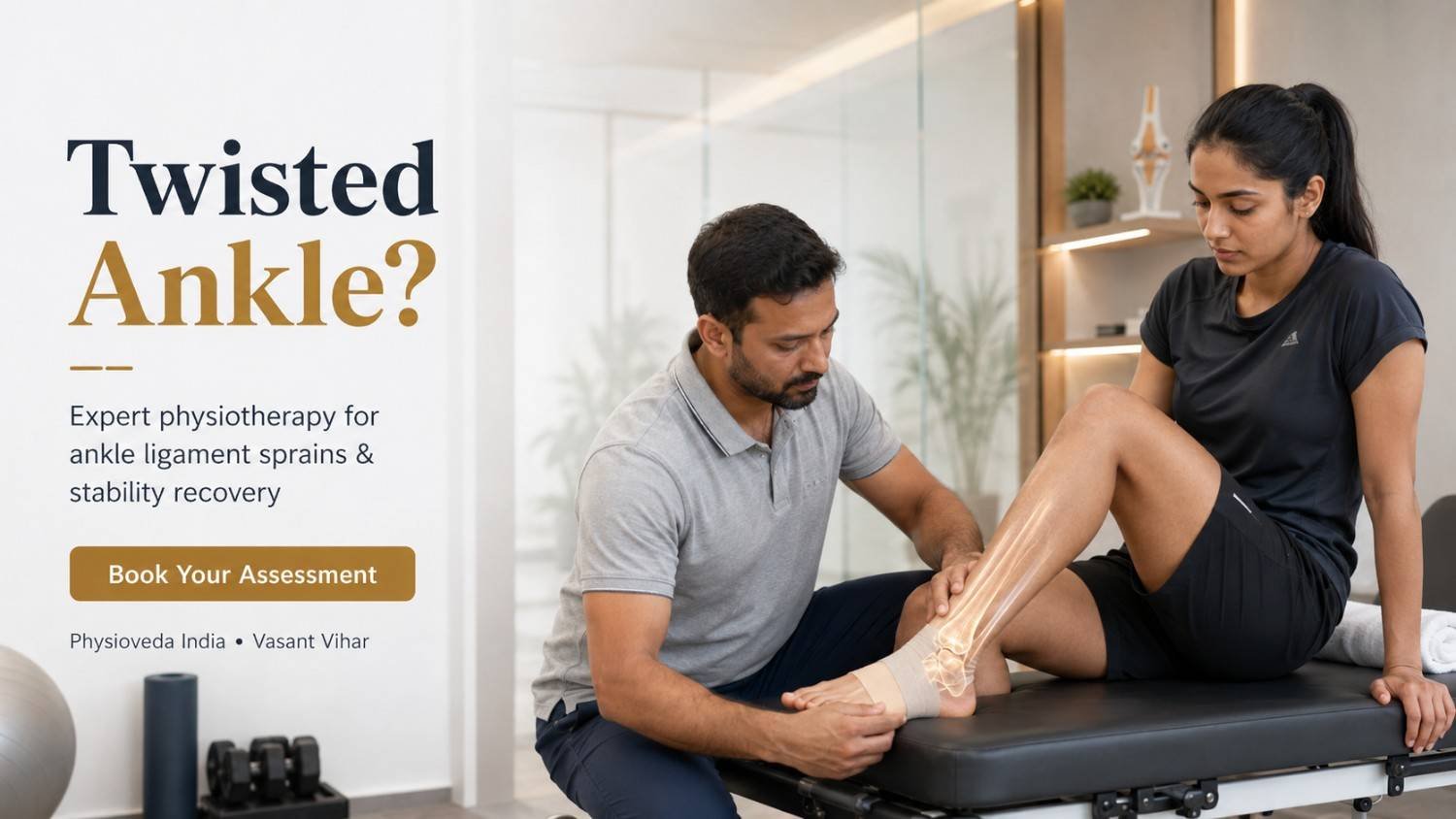
In Delhi, ligament injuries are common in both active and non-athletic people. We see them after badminton pivots, cricket turns, football tackles, gym lifts, running, dancing, slipping on wet marble flooring, missing a stair, or even getting out of a car awkwardly after a long commute.
Common causes include sudden twisting, poor landing, overloading during gym training, weak muscles around the joint, unsupportive footwear, fatigue, previous sprains, and returning to sport too soon.
Cleveland Clinic notes that sprains commonly affect joints such as the ankle, knee, wrist, thumb, and shoulder, and often happen because of falls, twists, or sports injuries. Cleveland Clinic — Sprains
For sport-related cases, structured sports physiotherapy can help assess strength, mobility, balance, training load, and return-to-sport readiness.
Symptoms That Tell You It May Be a Ligament Injury
Best ligament injury treatment in Delhi
You should suspect a ligament injury if pain starts after a twist, fall, sudden pivot, awkward landing, or forceful stretch. The joint may swell quickly or slowly. Bruising may appear. You may feel a pop, snap, or tearing sensation at the time of injury.
Common symptoms include pain around the joint, swelling, bruising, reduced movement, difficulty putting weight on the joint, weakness, instability, repeated giving way, pain while climbing stairs, and fear of using the joint normally.
A mild sprain may settle with early care. But if the joint feels unstable, swelling is significant, walking is painful, or you cannot return to normal movement, you should not keep waiting for weeks. Patients often come to us after trying rest, painkillers, or home remedies without full stability returning.
Why Rest Alone Is Not Enough
Best ligament injury treatment in Delhi
Rest may be useful in the early stage, but rest alone does not rebuild a ligament’s support system. After a sprain, your joint-position sense can become disturbed. That means your brain may not control the joint as accurately as before.
This is why someone may say, “Pain is less, but I still don’t trust my knee,” or “My ankle keeps twisting again.” The pain reduced, but the control did not fully return.
NHS guidance on sprains and strains highlights protection, gradual movement, and getting help if symptoms are not improving. NHS — Sprains and strains
A good rehab plan helps reduce pain and swelling, restore range of motion, strengthen supporting muscles, improve balance, correct movement faults, and reduce the chance of repeated injury. This is what separates quick symptom management from the Best ligament injury treatment in Delhi for long-term joint function.
Best Ligament Injury Treatment in Delhi — Physioveda India’s Phase-Wise Approach
Best ligament injury treatment in Delhi
At Physioveda India, we do not treat every ligament injury with the same exercise chart. A knee ligament injury, ankle sprain, shoulder ligament injury, wrist sprain, and post-surgery case all need different clinical decisions.
Our approach to the Best ligament injury treatment in Delhi is phase-wise because healing changes week by week. What is useful in the first three days may not be enough in week three. What is safe for a mild sprain may not be safe for a complete tear.
Phase 1 — Protection, Pain Control, and Swelling Management
The first phase protects the injured ligament while reducing pain and swelling. This may include clinical assessment, advice on bracing or support, protected weight-bearing, gentle pain-free movement, and load modification.
For painful injuries, pain management physiotherapy may help calm symptoms while keeping the joint protected. The goal is not to force movement. The goal is to prevent further irritation and prepare the joint for active recovery.
Phase 2 — Restoring Movement and Early Strength
Once acute pain starts settling, we work on safe movement. This may include joint mobilization, active range of motion, isometric strengthening, gait correction, and early balance training.
For an ankle ligament sprain, this may begin with controlled ankle movement, light resistance, and supported balance work. For a knee ligament injury, we may focus on swelling control, quadriceps activation, and safe bending or straightening.
Phase 3 — Building Strength, Stability, and Balance
This phase is where real recovery begins. Pain may be better, but the joint may still be weak or unstable. We progressively train the muscles that support the joint.
For knee injuries, this may include quadriceps, hamstrings, glutes, hip control, and knee alignment. For ankle injuries, we work on calf strength, peroneal strength, arch control, balance, and landing mechanics. For wrist or thumb injuries, we progress grip strength, wrist control, and functional loading.
If your goal is to find the Best ligament injury treatment in Delhi, this phase cannot be skipped. Strength and balance are what help the joint feel reliable again.
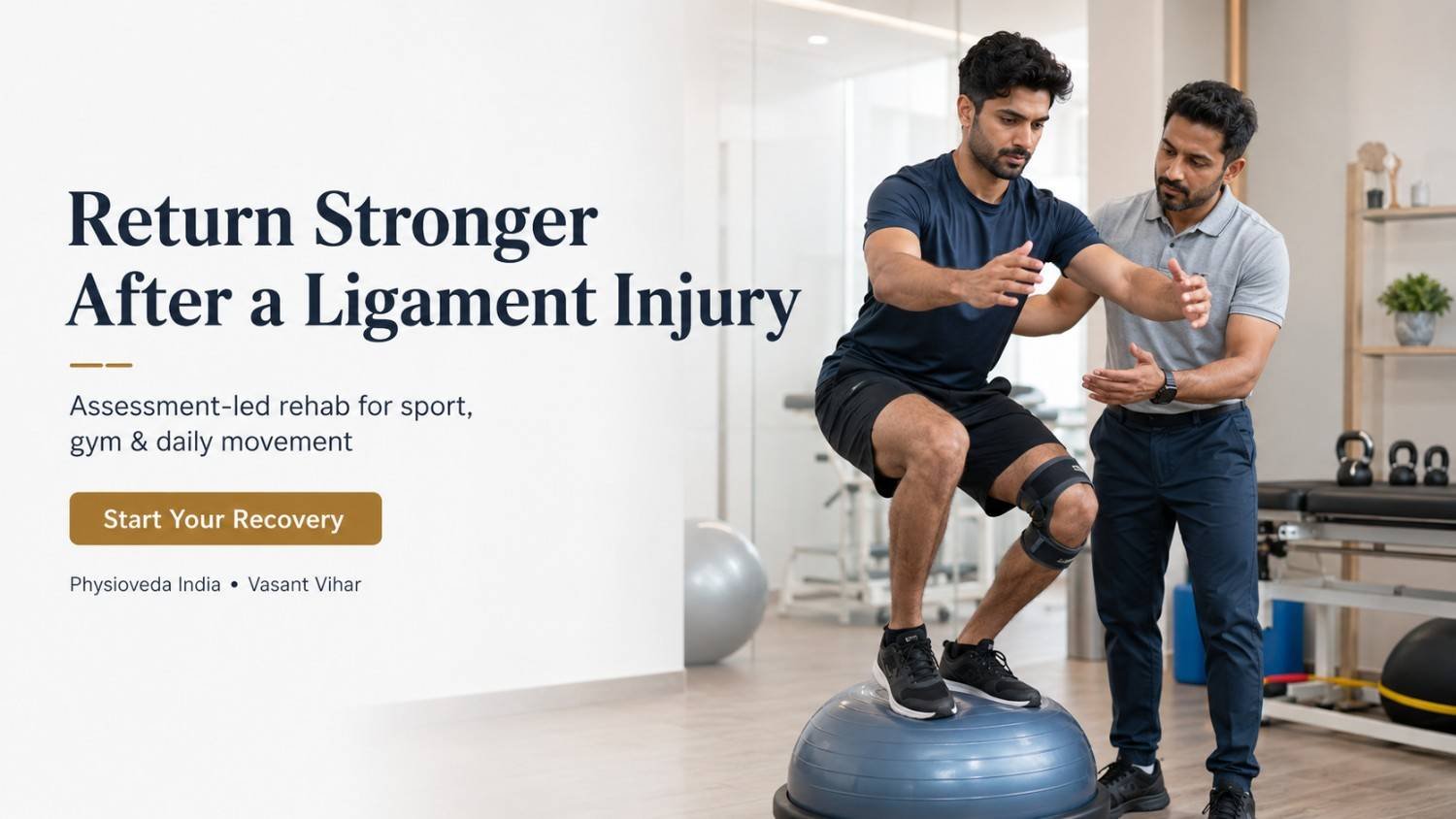
Phase 4 — Return to Sport, Gym, and Daily Life
Returning to activity should not be based only on time. It should be based on function. A person may be six weeks post-injury but still not ready for badminton, running, squats, or heavy gym training.
Before return, we assess pain response, swelling response, strength, balance, confidence, and activity-specific movement.
Ligament Injuries We Treat at Physioveda India
Best ligament injury treatment in Delhi
Patients who book ligament injury physiotherapy with us usually have one of these common injuries.
Knee Ligament Injuries — ACL, MCL, PCL, and LCL
Knee ligament injuries are common in sports involving pivoting, landing, tackling, cutting, and sudden stops. ACL injuries are among the most serious knee ligament injuries, especially in athletes and active people.
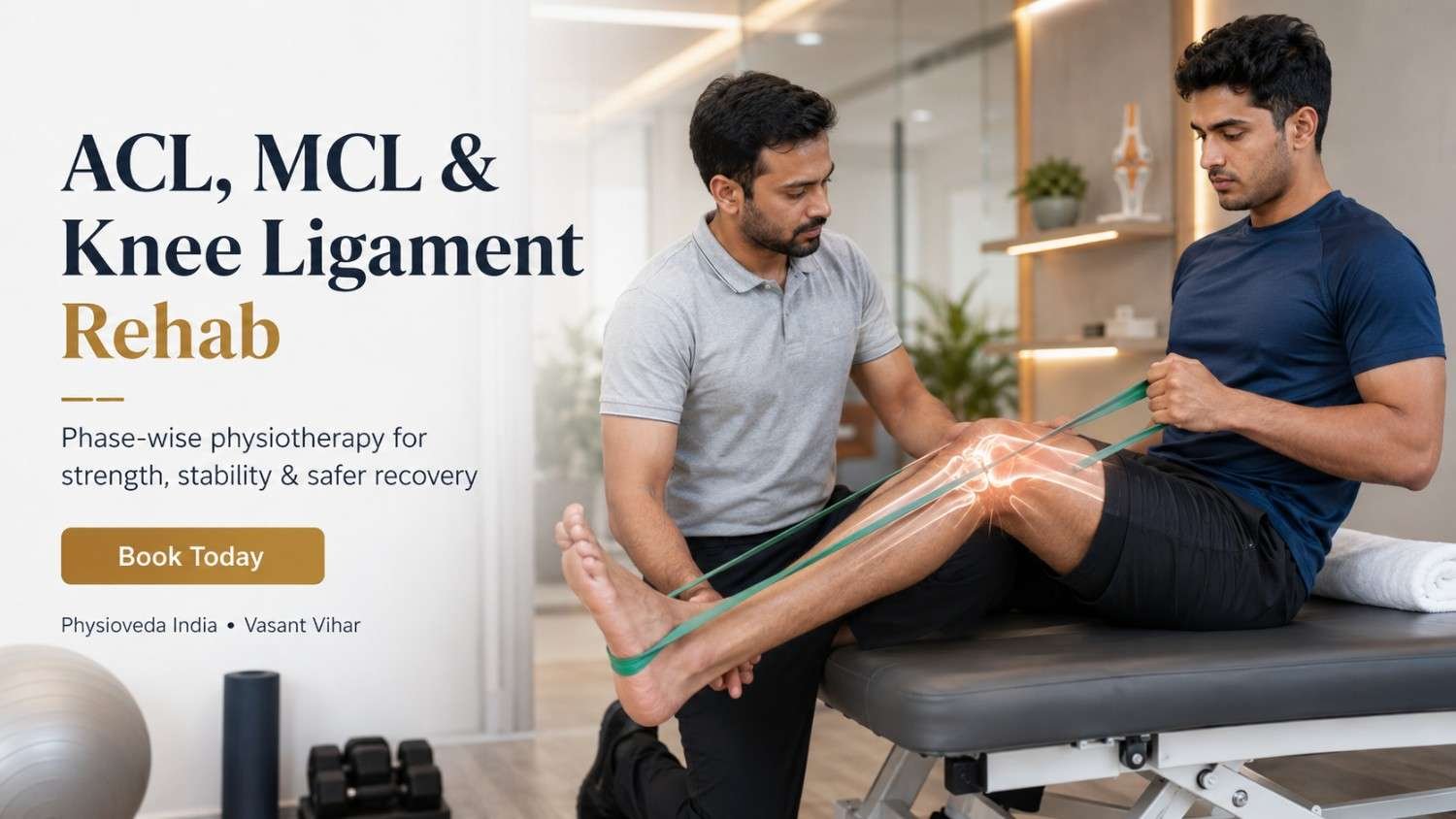
Some ACL injuries need reconstruction plus structured rehab. Some partial or lower-demand cases may be managed conservatively with neuromuscular physiotherapy. For depth, read our dedicated page on physiotherapy for ACL tear in Delhi.
MCL injuries often respond well to conservative care because of better healing potential. PCL injuries may also be managed without surgery in many isolated cases, but rehab must be planned carefully.
For complete tears, multi-ligament injuries, or reconstruction cases, patients may need coordinated care with an orthopedic specialist and post-surgery physiotherapy in Delhi.
Ankle Ligament Sprain
Ankle sprains are extremely common. The outer ankle ligaments, especially the ATFL, are often involved when the ankle rolls inward.
Many people ignore ankle sprains once pain reduces. Later, they complain of repeated twisting, weakness, and fear while walking on uneven ground. Proper ankle ligament sprain treatment Delhi patients need should include swelling control, mobility, strength, proprioception, and gradual return to walking, running, or sport.
Shoulder, Wrist, and Thumb Ligament Injuries
Shoulder ligament injuries can happen after a fall, dislocation, gym injury, or sports collision. Physiotherapy may include pain control, mobility work, rotator cuff strengthening, scapular control, posture correction, and gradual overhead loading. You can also read our guide on physiotherapy for shoulder injuries in Delhi.
Wrist and thumb ligament injuries can happen after a fall on the hand, racket sport injury, lifting injury, or thumb twist. Thumb UCL injuries need careful assessment because some complete tears may need surgical repair rather than only bracing.
When You Might Need an MRI or Specialist Referral
Not every ligament injury needs an MRI. Many sprains can be assessed through history, clinical examination, movement testing, and stability testing. But some cases need further evaluation.
You may need imaging or specialist referral if there is gross instability, suspected complete rupture, inability to bear weight, suspected fracture, major swelling, multi-ligament injury, repeated giving way, locking, numbness, deformity, or failure to progress with conservative care.
A good physiotherapy clinic should know when to treat and when to refer. That is part of safe, ethical care. For anyone comparing ligament injury treatment options, this referral judgment is very important.
Best ligament injury treatment in Delhi
How Long Does Ligament Injury Recovery Take?
Ligament injury recovery time depends on the grade of injury, joint involved, age, previous injuries, lifestyle, and rehab consistency.
A Grade I sprain may recover in around 1–3 weeks. A Grade II partial tear may take around 3–6 weeks. A Grade III complete tear may take six weeks to several months, especially if surgery is needed.
But time alone is not enough. The better question is: can the joint handle your real life? Can you climb stairs, walk confidently, squat, lift, run, jump, turn, or return to your sport without pain, swelling, or instability?
This is why the Best ligament injury treatment in Delhi should include objective progression, not only a fixed timeline.
Why Choose Physioveda India for Best Ligament Injury Treatment in Delhi?
Best ligament injury treatment in Delhi
When a patient searches “Which clinic should I book for the Best ligament injury treatment in Delhi?” the answer should be based on expertise, assessment quality, rehab planning, and patient safety — not only ads or big promises.
Physioveda India in Vasant Vihar is designed for patients who want clear assessment, structured physiotherapy, and a practical recovery plan. We treat ligament injuries across major joints and focus on the complete path from pain control to confident movement.
We provide assessment-led care, phase-wise rehabilitation, sports and daily-life specific progression, and a convenient South Delhi location for patients from Vasant Vihar, Vasant Kunj, Munirka, RK Puram, Chanakyapuri, Saket, Hauz Khas, Green Park, and nearby NCR areas.
For patients actively looking to book the Best ligament injury treatment in Delhi, Physioveda India offers a clear pathway: assess the injury, protect the joint, rebuild strength, restore confidence, and guide you back safely.
Frequently Asked Questions for Best Ligament Injury Treatment in Delhi
What is the best treatment for a ligament injury?
How long does it take for a torn ligament to heal?
Can a ligament injury heal without surgery?
What is the difference between a sprain and a ligament tear?
Is physiotherapy necessary, or is rest enough?
Which exercises help a ligament injury heal faster?
Which clinic should I choose for ligament injury treatment in Delhi?
Book the Best Ligament Injury Treatment in Delhi at Physioveda India
If your knee, ankle, shoulder, wrist, or thumb still feels painful, swollen, weak, or unstable after a twist or fall, do not wait for it to become a repeated problem.
For the Best ligament injury treatment in Delhi, visit Physioveda India, Vasant Vihar, for a detailed physiotherapy assessment and phase-wise recovery plan.
Call 9599055203 or 01143033784 to book your appointment, or book an appointment through our contact page.
Medical disclaimer: This article is for educational purposes only and is not a substitute for an in-person clinical assessment, medical diagnosis, or treatment plan. If you have acute injury, severe swelling, inability to bear weight, deformity, numbness, major instability, or worsening symptoms, please get evaluated promptly by a qualified healthcare professional.