

Best Joint Pain Treatment in Delhi | Non-Surgical Advanced Joint Care
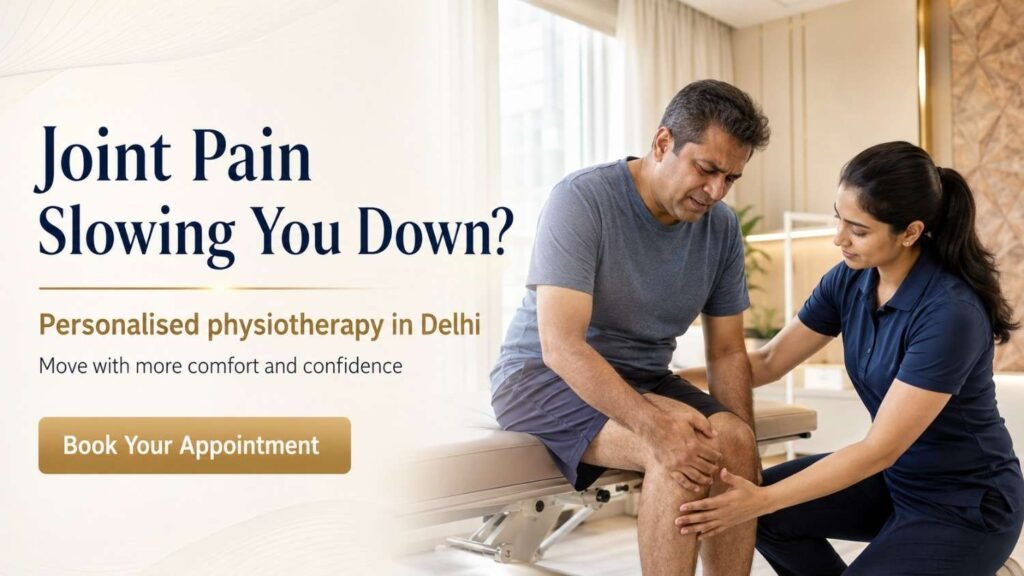
Joint pain can make ordinary activities feel unnecessarily difficult. Climbing stairs may become tiring, getting up from a chair may feel uncomfortable, and even a short walk can start affecting your confidence. When this happens, most people do not simply want a list of exercises. They want to understand what is causing the pain, whether it can be managed without surgery, and where they can receive the best joint pain treatment in Delhi for their individual condition.
The most suitable treatment is rarely one machine, one injection, one medicine, or one standard exercise programme. Joint pain can arise from arthritis, an injury, muscle weakness, reduced mobility, altered movement patterns, inflammation, overuse, or a combination of factors. Therefore, the first step should be a careful assessment rather than a rushed treatment session.
At PhysioVeda India, Vasant Vihar, joint pain care is planned around the affected joint, your symptoms, daily activities, medical history, and recovery goals. The aim is to help you understand the problem, manage pain safely, improve movement, and return to the activities that matter to you.
What Is the Best Joint Pain Treatment in Delhi?

The best joint pain treatment in Delhi is an assessment-led plan that addresses the cause of pain instead of treating every patient in the same way. Depending on the diagnosis, treatment may include therapeutic exercise, joint mobility work, strengthening, balance training, walking correction, activity modification, education, and coordination with a doctor when medical investigation is required.
For osteoarthritis, NICE guidance recommends tailored therapeutic exercise, such as local muscle strengthening and general aerobic activity. Supervised exercise may also be considered, particularly when a patient needs help with technique, confidence, progression, or pain management.
In simple terms, the plan should establish what is contributing to the pain, whether the joint is safe to load, which activities aggravate it, and how rehabilitation should be progressed. That is why an individual assessment is more valuable than copying a generic routine from the internet.
Best Joint Pain Treatment Delhi: Why a Proper Assessment Matters
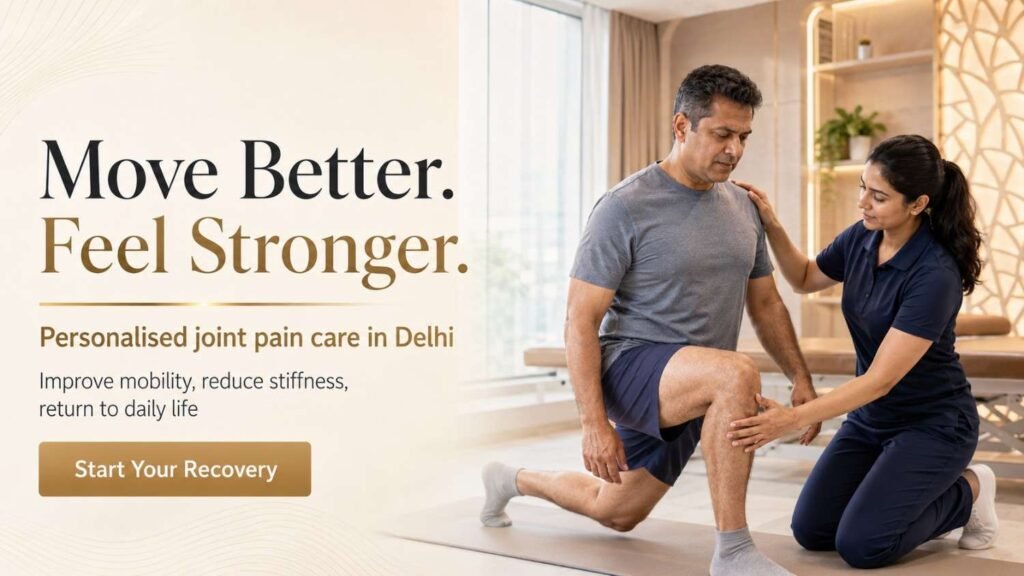
People searching for joint pain treatment Delhi often describe similar symptoms: stiffness in the morning, pain while walking, discomfort during stairs, reduced grip, swelling, clicking, weakness, or difficulty using the joint normally. However, similar symptoms do not always have the same cause.
For example, knee pain may be related to osteoarthritis, ligament injury, reduced hip strength, altered walking, or sudden overload. Shoulder pain may involve stiffness, tendon irritation, weakness, or reduced shoulder-blade control. Ankle pain may continue when balance, calf strength, or mobility has not been restored after a sprain.
Therefore, the best joint pain treatment in Delhi should begin with a structured assessment of pain, swelling, mobility, strength, balance, functional movement, medical history, previous injuries, and available reports.
A joint is the area where two or more bones meet, and most joints are designed to support movement. Cleveland Clinic’s joint overview explains how joints support the body and enable movement. Cartilage, ligaments, tendons, muscles, and the joint capsule all contribute to function, so pain should not automatically be blamed on only one structure.
Best Joint Pain Treatment in Delhi for Common Causes of Pain

A search for joint pain treatment in Delhi may be triggered by a new injury, gradual stiffness, age-related changes, a sports problem, or pain that has returned after months or years. Common causes include the following.
Osteoarthritis and Age-Related Joint Changes
Osteoarthritis commonly affects weight-bearing or frequently used joints, including the knees, hips, hands, and spine. Symptoms may include pain during activity, stiffness after rest, reduced movement, and difficulty with daily tasks.
The best joint pain treatment in Delhi for osteoarthritis should not be based on fear of movement. In fact, regular, tailored exercise is recommended because it can improve pain, function, and quality of life over time. Some initial discomfort may occur when exercise begins, but the plan should be adjusted and progressed according to the person’s response.
You can also read our detailed guide on arthritis physiotherapy in Delhi for more information about knee arthritis, strengthening, walking correction, and long-term joint care.
Ligament Sprains and Joint Instability
A twist, fall, awkward landing, or sports injury may stretch or tear a ligament. Pain reduction is only one stage; stability, strength, balance, and activity-specific control should also be rebuilt.
Our guide to the best ligament injury treatment in Delhi explains how phase-wise rehabilitation may be planned for knee, ankle, shoulder, wrist, and other ligament injuries.
Tendon and Overuse-Related Pain
Repetitive loading at work, in the gym, during sport, or through household activity can irritate the tissues around a joint. Rest may temporarily reduce symptoms, but the pain can return when the same activity is resumed without improving strength, technique, recovery, or workload management.
In such cases, the best joint pain treatment in Delhi may include gradual loading, movement correction, activity modification, and a structured return to work, exercise, or sport.
Post-Surgery Stiffness and Weakness
After joint replacement, ligament reconstruction, fracture fixation, or another orthopaedic procedure, pain and stiffness may continue while the body heals. Rehabilitation should follow the surgeon’s precautions and the stage of tissue recovery.
Our guide to post-surgery physiotherapy in Delhi explains how mobility, strength, walking, and independence may be rebuilt progressively following surgery.
Inflammatory or Medical Causes
Not every painful joint should be treated as a routine mechanical problem. Conditions such as rheumatoid arthritis, gout, infection, or systemic illness may require medical assessment and medication alongside rehabilitation.
According to NHS joint-pain guidance, a joint that becomes hot, red, swollen, and painful—especially when fever or a general feeling of illness is present—requires prompt medical attention. Severe pain after injury, inability to bear weight, visible deformity, numbness, or loss of sensation also needs urgent evaluation.
Symptoms That Suggest You Should Book an Assessment for Best Joint Pain Treatment in Delhi
You do not need to wait until movement becomes severely restricted. Consider booking the best joint pain treatment in Delhi when:
- Pain keeps returning after rest or medication
- Stiffness affects your morning routine
- Walking, stairs, sitting, standing, reaching, or gripping have become difficult
- A joint feels weak, unstable, or likely to give way
- Swelling repeatedly returns after normal activity
- You have stopped exercising because you are afraid of worsening the pain
- You are recovering from a fracture, surgery, or ligament injury
- Pain has started affecting sleep, work, travel, or independence
- You are unsure which exercises are safe for your condition
Early assessment does not mean that every patient needs a long treatment programme. Instead, it helps clarify the likely cause, identify warning signs, and decide whether physiotherapy, medical referral, imaging, or a combined approach is appropriate.
How Physiotherapy May Help With Best Joint Pain Treatment in Delhi
The best joint pain treatment in Delhi should help the patient become more capable, not more dependent on repeated passive treatment. Physiotherapy may support recovery through several connected strategies.
1. Pain and Symptom Management
During the early stage, the treatment plan may focus on reducing symptom irritability and helping you move more comfortably. Education, pacing, positioning, gentle movement, and selected hands-on or physical therapy techniques may be used according to the assessment.
However, symptom-relief techniques should usually support an active rehabilitation plan rather than replace it.
2. Joint Mobility
Pain and swelling can make a joint feel stiff. In addition, surrounding tissues may tighten when movement has been avoided for a long period. Guided mobility exercises and, where appropriate, manual therapy may be used to improve movement.
For osteoarthritis, NICE advises that manual therapy may be considered alongside therapeutic exercise rather than being used as a stand-alone treatment.
3. Strengthening Around the Joint
Muscles help absorb load, control movement, and support the joint during daily activities. Therefore, strengthening is often a central part of the best joint pain treatment in Delhi.
The exercise programme may begin with simple, comfortable movements and progress towards functional tasks such as sit-to-stand practice, stair control, lifting, carrying, reaching, squatting, or sport-specific drills.
4. Balance and Stability Training
After ankle sprains, knee injuries, ageing-related weakness, or prolonged inactivity, balance may be reduced. This can affect confidence and increase the possibility of another injury.
Balance exercises are selected according to the affected joint, the patient’s current ability, and the activities they want to resume. A beginner and an athlete will not receive the same progression.
5. Walking and Movement Correction
Joint pain may change the way you walk, stand, reach, or perform everyday tasks. Sometimes the painful movement is a protective response. At other times, reduced control or repeated compensation keeps overloading the area.
A physiotherapist can observe the movement, identify modifiable factors, and teach a more comfortable and efficient movement strategy.
6. Activity and Lifestyle Guidance
Complete rest is rarely the long-term solution for common joint pain. The NHS advises against stopping movement completely, while the CDC lists joint-friendly activities such as walking, cycling, tai chi, swimming, and water exercise. Activity still needs to match the diagnosis and current pain level.
What Happens During Your First Appointment for Best Joint Pain Treatment in Delhi
When you book the best joint pain treatment in Delhi at PhysioVeda India, the first session is used to understand your symptoms, lifestyle, goals, medical history, available reports, movement, strength, balance, and functional limitations.
The likely contributing factors are explained, warning signs are screened, and a personalised clinic and home-management plan is prepared.
Some patients mainly need guidance and a focused exercise programme. Others need supervised rehabilitation over several sessions. The frequency and duration should be decided after assessment, not promised before the condition has been examined.
Why Choose PhysioVeda India for Best Joint Pain Treatment?
Choosing the best joint pain treatment in Delhi should involve more than comparing equipment or looking for the strongest advertising claim. Patients should consider whether the clinic assesses the problem properly, explains the plan clearly, tracks progress, and adapts treatment to real-life goals.
At PhysioVeda India, Vasant Vihar, the approach includes:
Assessment Before Treatment
Your symptoms, movement, strength, medical history, and functional limitations are reviewed before the treatment plan is finalised.
Personalised Rehabilitation
The programme is adjusted according to the painful joint, diagnosis, age, activity level, occupation, lifestyle, and recovery goals.
Active Recovery
Exercises and movement strategies are used to help you build strength, mobility, stability, and confidence outside the clinic.
Access to Related Services
Patients who require broader support can explore our pain management treatments in Vasant Vihar, advanced physiotherapy services, and sports physiotherapy programmes.
Convenient South Delhi Location
The clinic is located at 74, Poorvi Marg, Vasant Vihar, New Delhi, and serves patients from nearby South Delhi areas.
For clinic updates, recovery education, and practical movement tips, follow PhysioVeda India on Instagram.
How Long Does Joint Pain Treatment Take?
There is no honest fixed timeline for every joint problem. The recovery period depends on the diagnosis, severity, duration of symptoms, age, medical history, activity demands, previous injuries, consistency with exercises, and whether surgery has been performed.
A recent mild strain may improve relatively quickly. Long-standing arthritis, repeated instability, or post-operative weakness may require a longer and more structured plan.
Therefore, the best joint pain treatment in Delhi should include regular progress reviews. Improvements may be measured through pain levels, joint movement, strength, walking distance, stair ability, balance, sleep, work tolerance, or return to sport.
Can Joint Pain Be Managed Without Surgery?
Many joint conditions can be managed conservatively, especially when the problem is assessed early and rehabilitation is followed consistently. However, not every case is the same.
Significant fractures, severe instability, advanced structural damage, infection, or certain surgical conditions may require specialist medical or surgical care.
Physiotherapy may still be useful before or after surgery to improve strength, movement, confidence, and function. The right decision should be made with the appropriate healthcare professionals after the diagnosis and available treatment options have been reviewed.
Book the Best Joint Pain Treatment in Delhi at PhysioVeda India
Joint pain should not be allowed to quietly reduce your movement, confidence, and independence. Whether the problem affects your knee, shoulder, hip, ankle, elbow, wrist, or another joint, a detailed assessment can help you understand what is happening and what should be done next.
For the best joint pain treatment in Delhi, visit PhysioVeda India in Vasant Vihar for an assessment-led, personalised physiotherapy plan.
Call 9599055203 or 01143033784 to book your appointment, or submit your details through the PhysioVeda India contact page.
Frequently Asked Questions About the Best Joint Pain Treatment in Delhi
Which treatment is best for joint pain?
Can physiotherapy reduce joint pain?
Should I exercise when my joints hurt?
How do I know whether joint pain is serious?
How many physiotherapy sessions will I need?
Is joint pain treatment available for elderly patients?
Do you treat knee, shoulder, hip, and ankle pain?
Where can I book the best joint pain treatment in Delhi?
Medical disclaimer: This article provides general educational information and is not a substitute for an in-person assessment, medical diagnosis, or personalised treatment plan from a qualified healthcare professional.